Metal-on-metal
Adept
The proven option for active men with larger native heads. Manufactured by MatOrtho, with ODEP 15A rating in male patients with 48 to 58 mm heads.
Adept detail →
Hip resurfacing is a bone-preserving form of hip replacement. Instead of removing the arthritic femoral head and inserting a long stem down the thigh-bone, the surgeon reshapes the worn surface of the femoral head and caps it with a smooth shell. A matching cup is set into the socket. The native femoral head, neck, and the canal of the upper femur all stay where they are.
The practical consequences are significant. The bearing diameter sits close to the size of a person's native hip, which makes the new joint feel more like the original and reduces the risk of dislocation. Load transfers through bone in something close to its physiological pattern, which helps preserve muscle balance and proprioception. And because almost the entire upper femur is conserved, the door is left open to a straightforward conversion to a standard hip replacement many years later, should that ever become necessary.
Both restore a worn hip, but they take very different approaches. A short comparison sits below. For a full side-by-side guide covering bone preservation, longevity, activity, anatomy and revision, see the dedicated Resurfacing vs Replacement page.
Neither is universally better. The right operation depends on bone quality, anatomy, age, sex, activity goals and the bearing options that are sensible for the individual.
Am I a Candidate?The classic resurfacing patient is an active adult with hip osteoarthritis, good bone quality and a life the hip needs to keep up with: running, cycling, skiing, manual work, a sport played seriously. In the metal-on-metal era that group was narrowed further, to men with larger native femoral heads. The arrival of ceramic bearings has widened it again, and women and smaller-framed patients who were once steered away from the operation are now routinely considered.
What decides suitability is not age or sex on their own but what the imaging and examination show: the quality of the bone in the femoral head and neck, the shape and condition of the joint, and whether the goals you have for the hip are ones a resurfacing serves better than a total hip replacement. Some hips are simply better served by a replacement, and an honest assessment will say so.
The full account of how suitability is assessed, including the factors that count for and against, is on the am I a candidate? page.
Hip resurfacing is most commonly performed through a posterior approach. The patient lies on their side. The hip is exposed, the short external rotators released, and the joint capsule opened. The femoral head is then dislocated forwards so both sides of the joint can be worked on in sequence.
On the femoral side, a centring wire is placed down the axis of the neck. The femoral head is reamed cylindrically to leave a peg of native bone in slight valgus alignment, with the chamfer prepared for the cap to seat squarely. On the acetabular side, the femur is retracted out of the way and the socket reamed line-to-line. A press-fit cup, with a hydroxyapatite or porous coating to encourage bony ingrowth, is impacted into position. After a trial, the femoral cap is impacted onto the prepared head: cemented in metal-on-metal designs, press-fit in modern ceramic-on-ceramic designs. The hip is reduced and the soft tissues closed in layers.
The operation typically takes around 90 to 120 minutes. Anaesthesia is most often general, often supplemented by a regional block, with tranexamic acid used to limit blood loss. Many patients spend one to three nights in hospital, and some specialist centres now run enhanced-recovery pathways for selected day-case patients.
For a deeper step-by-step walk-through, including imaging, anaesthetic and rehabilitation detail, see the dedicated Procedure page; for what happens before the operation, from pre-operative assessment to getting surgery-fit, see preparing for hip resurfacing.
The idea of resurfacing the hip is older than most people realise; the full story is told in the history of hip resurfacing. In 1923, the Boston surgeon Marius Smith-Petersen began trialling mould arthroplasty: first glass, then later Vitallium, shaped over a reshaped femoral head. Across the Atlantic, John Charnley experimented with PTFE (Teflon) caps in the 1950s. Both efforts failed for the same reason. The materials of the day could not survive the loads passing through a hip.
In the 1970s and 1980s a second wave of resurfacings reached patients in Europe and Japan. The ICLH device in London, Wagner's design in Germany, and Furuya's work in Japan all paired a metal femoral cap with a thick polyethylene cup. They failed predominantly from wear of the polyethylene, the bone reaction that wear debris provoked, and ischaemic loss of the femoral remnant. Resurfacing went quiet for nearly a decade.
The modern operation was developed in Birmingham in the 1990s. Derek McMinn, working at the Royal Orthopaedic Hospital, refined a metal-on-metal bearing using as-cast high-carbon cobalt-chromium and an HA-coated cup that could be press-fit into bone. The Birmingham Hip Resurfacing was first implanted in July 1997, and went on to become the first commercially successful modern resurfacing implant. By the mid-2000s, resurfacing accounted for around one in ten hip arthroplasties in the United Kingdom and Australia, with several other devices including Conserve Plus, Cormet, Durom and Adept also in widespread use.
The decade that followed was the most turbulent in modern hip surgery. In August 2010 DePuy withdrew the ASR resurfacing and large-head total replacement worldwide after independent data revealed unacceptably high revision rates, in some series approaching one in two by ten years. The UK regulator, the MHRA, issued alerts in 2010, 2012 and again in 2017, broadening the pool of patients who required formal surveillance.
The cause was not the operation itself but the bearing. Wear and corrosion at metal-on-metal surfaces, especially with smaller heads or sub-optimal cup positioning, released cobalt and chromium ions into the joint and the bloodstream. In some patients this provoked a local inflammatory reaction known as metallosis or a pseudotumour; in a smaller number, very high cobalt levels caused systemic problems. Analysis of National Joint Registry data made clear that the dominant risk factors were small bearing diameter, smaller native head size, and lower surgeon volume. In 2015, Smith & Nephew voluntarily withdrew the smaller-head Birmingham implants and recommended that the system no longer be used in women.
By the late 2010s, resurfacing volumes had collapsed worldwide. Many surgeons abandoned the operation entirely. It survived in the hands of a small group of high-volume specialists, who continued to deliver excellent long-term results in carefully selected patients while the wider profession waited for a better bearing. That experience gap is exactly why choosing a hip resurfacing surgeon with genuine resurfacing volume matters so much.
The story of the last few years has been the arrival of ceramic-on-ceramic resurfacing. Modern medical-grade ceramic, principally a zirconia-toughened alumina composite known as BIOLOX delta, has the strength to be machined thin enough to work as a true resurfacing bearing. It produces some of the lowest wear of any artificial joint surface, and crucially it releases no cobalt or chromium. The bearing question that defined the metal-on-metal era is, for these implants, resolved.
Two ceramic resurfacing systems are now in clinical use, both with a strong British connection. The ReCerf, made by MatOrtho and developed from the proven Adept geometry, was first implanted in 2018 and received its CE mark in 2024. Multicentre two-year and five-year results published in 2024 and 2025 have been encouraging. The H1, developed at Imperial College London with Professor Justin Cobb and made by Embody, was first implanted in 2017 and was awarded a CE mark under the new EU Medical Device Regulation in 2025. A monoblock, anatomically contoured ceramic implant, it suits patients across the range of native head sizes and, like ReCerf, has reopened the conversation for many, including women previously advised against the operation in the metal-on-metal era.
The original metal-on-metal Adept implant is still in use in a defined group of patients: typically active younger men with larger native heads, where decades of registry data confirm excellent durability. The combination of three implants now available means the conversation has shifted from "is this patient suitable for resurfacing" to "which resurfacing bearing is the right fit for this patient's anatomy and life".
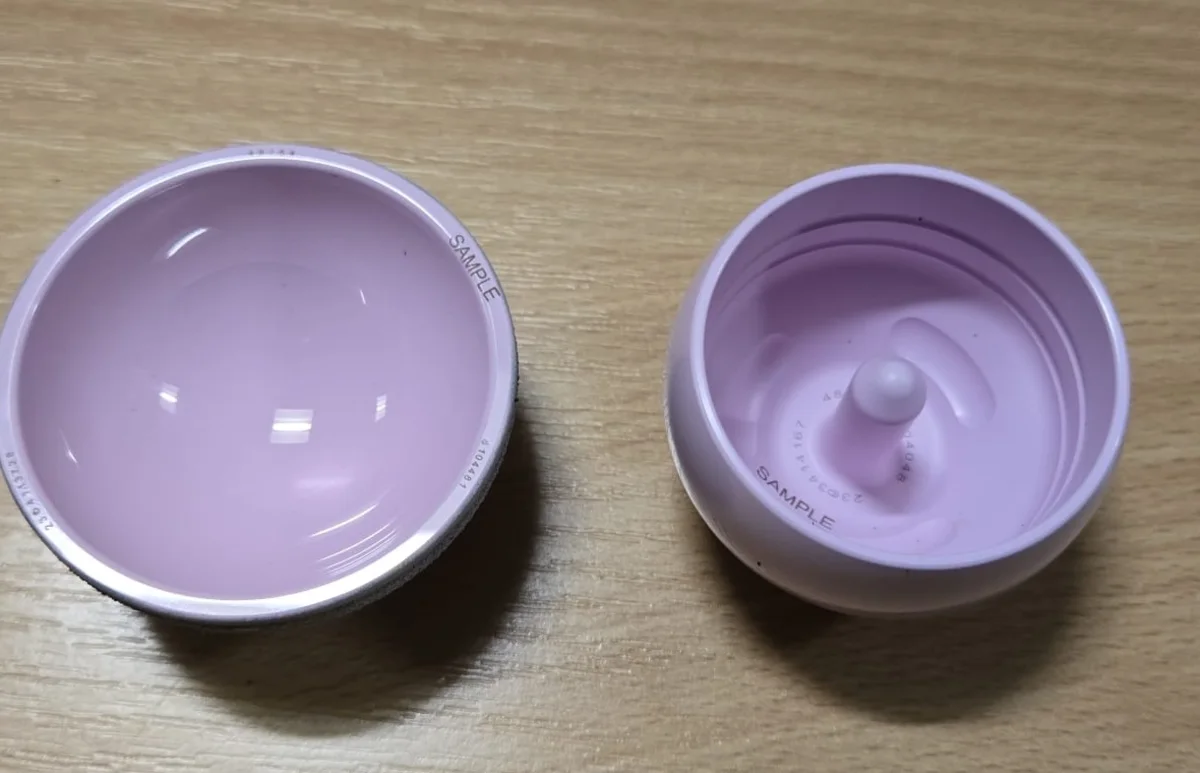
The proven option for active men with larger native heads. Manufactured by MatOrtho, with ODEP 15A rating in male patients with 48 to 58 mm heads.
Adept detail →The all-ceramic successor to Adept. Made by MatOrtho, CE marked in 2024, with multicentre two- and five-year outcomes data now published.
ReCerf detail →The British ceramic resurfacing from Imperial College London and Embody. CE marked under EU MDR in 2025.
H1 detail →All hip surgery carries the general risks of any major operation, including infection, blood clots, nerve injury, and the small anaesthetic risks that come with any procedure. Resurfacing has its own distinct profile in addition to these, and any honest conversation about the operation should cover the following. A fuller, patient-facing account — how common each one is and what reduces it — is in the guide to hip resurfacing complications.
Self-pay hip resurfacing with Mr Hussain in Birmingham costs £12,250 for an Adept metal-on-metal resurfacing and £13,450 for a ceramic ReCerf resurfacing, as fixed-price, all-inclusive packages at Royal Orthopaedic Hospital private care. One figure covers the surgeon's and anaesthetist's fees, the implant, theatre time, your hospital stay, in-patient physiotherapy and routine post-operative follow-up. The £250 initial consultation is charged separately, and your itemised quotation is confirmed in writing after your consultation.
Insured patients do not need the package: hip resurfacing is covered by most comprehensive UK private medical policies where it is clinically indicated, and Mr Hussain is recognised by the major insurers. The full breakdown of self-pay and insured routes is on the fees and insurance page.
A written quotation takes one consultation. Bring your X-rays if you have them; if not, imaging is arranged on the day.
Book a ConsultationIn well-selected patients the metal-on-metal resurfacings have some of the best long-term records in joint registries: the Adept holds an ODEP 15A rating in men with 48 to 58 mm femoral heads, meaning strong documented survival beyond fifteen years. The ceramic implants are newer and do not yet have decades of follow-up, though medical-grade ceramic has been used in total hip replacement for decades and wears extremely slowly. Every resurfacing in this practice is followed up over the long term.
Most patients take their first steps on the day of surgery, are walking unaided by four to six weeks, and are cleared for a graduated return to impact sport at four to six months. The full week-by-week timeline, from the day of surgery to the return of sport, is on the recovery page.
For well-selected patients, yes; a return to running is one of the main reasons active patients choose resurfacing over total hip replacement. The large bearing and preserved bone make impact activity a realistic goal rather than an exception. The phase-by-phase return is mapped in the guide to running after hip resurfacing.
There is no fixed age cut-off. What matters is bone quality, anatomy and activity, assessed on imaging and examination, rather than the date on your birth certificate. Resurfacing is most often chosen by patients in their forties, fifties and sixties who intend to stay active, but suitability is decided case by case on the same candidacy criteria at any age.
Neither is universally better. Resurfacing preserves bone, uses a large stable bearing and suits high activity; a total hip replacement fits almost any anatomy and bone quality and remains the dependable default of modern hip surgery. The right answer depends on your bone, anatomy, age and goals; the full side-by-side comparison is on the resurfacing vs replacement page.
With Mr Hussain in Birmingham, self-pay packages cost £12,250 for an Adept metal-on-metal resurfacing and £13,450 for a ceramic (ReCerf) resurfacing: fixed-price and all-inclusive, covering the surgeon's and anaesthetist's fees, implant, theatre time, hospital stay, in-patient physiotherapy and routine follow-up. The £250 initial consultation is charged separately, and most comprehensive UK private medical policies cover the operation where clinically indicated.
The most useful next step is a private consultation with imaging review. We will tell you, plainly, whether hip resurfacing is the right operation for you, which bearing would suit you, and what realistic recovery looks like.
Book a Consultation