Metal-on-metal
Adept
The metal-on-metal predecessor of the modern resurfacing family. Longest documented track record. Offered today for active men with larger native heads.
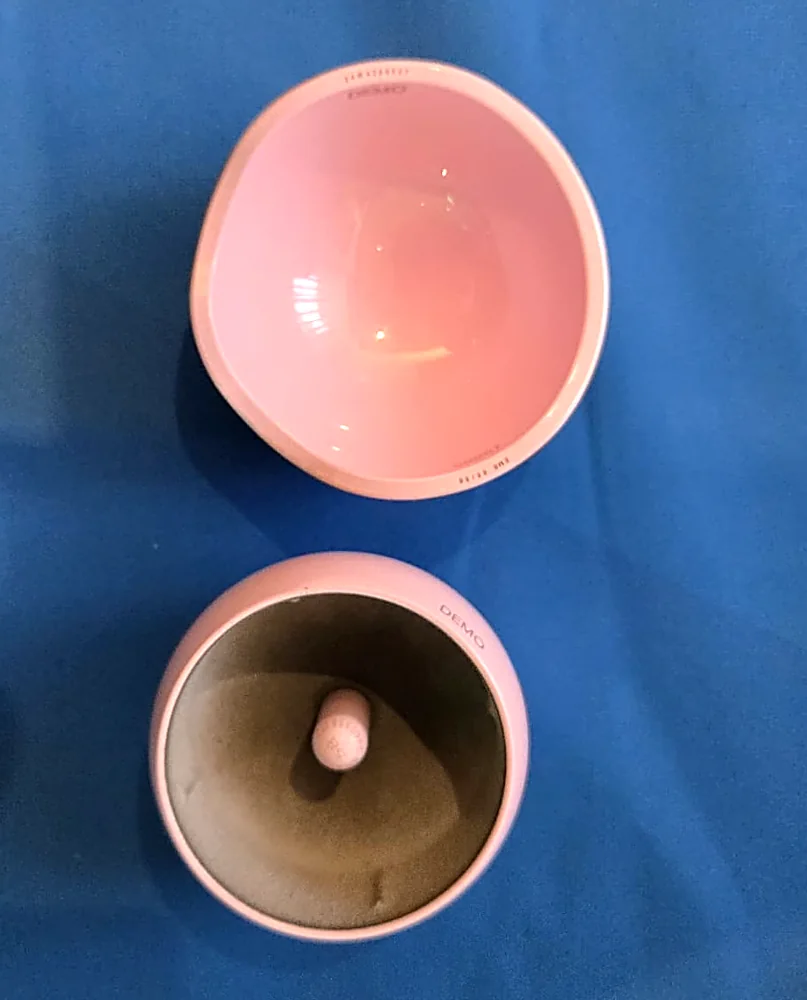
Adept detail →H1 is the British ceramic-on-ceramic hip resurfacing system developed at Imperial College London in collaboration with Professor Justin Cobb, and manufactured by Embody. It is a monoblock design: a solid ceramic femoral cap and acetabular cup, each anatomically contoured to match the natural profile of the joint and fixed without cement.
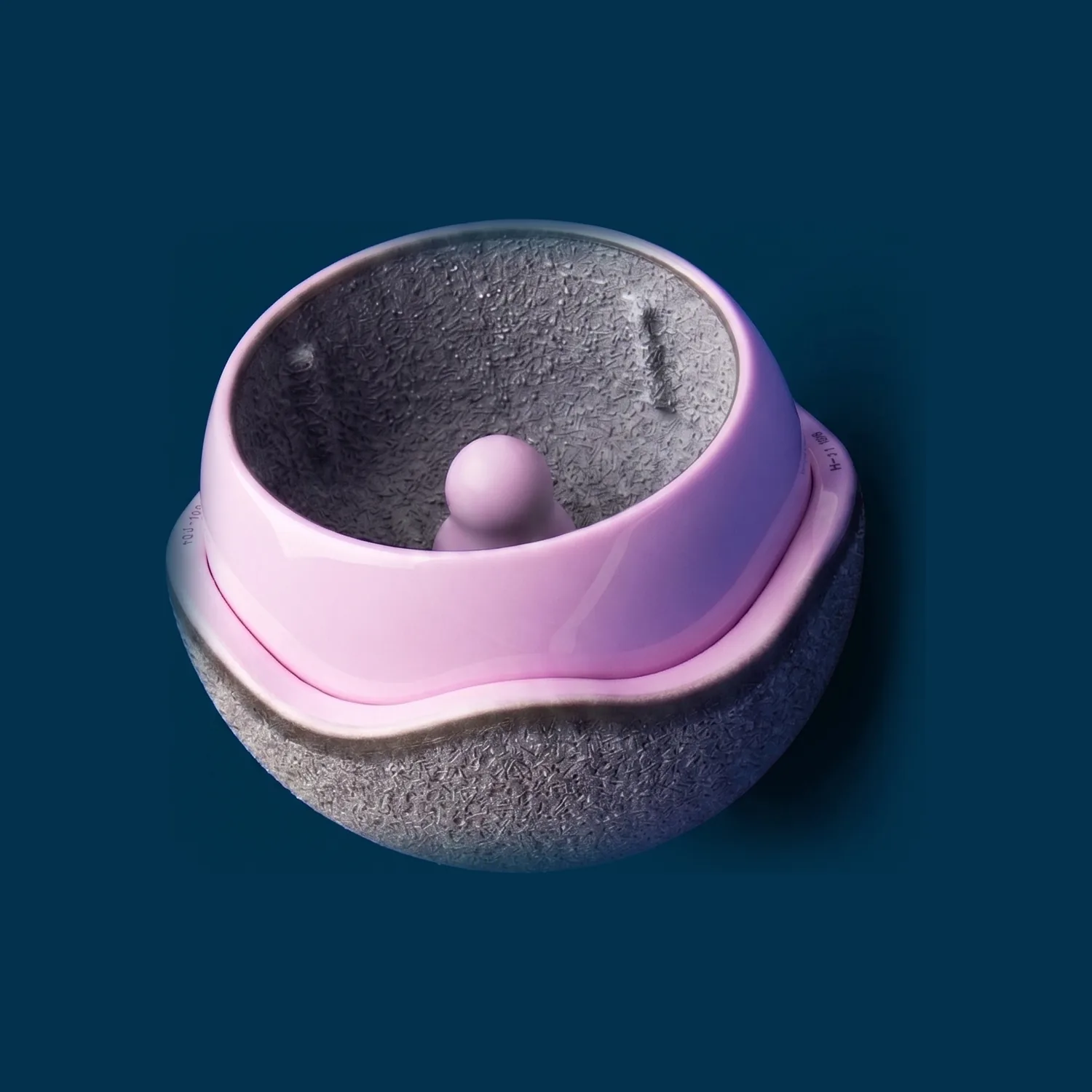
The H1 femoral cap and modular acetabular cup — the ceramic-on-ceramic resurfacing system from Embody.
The bearing is BIOLOX delta, the zirconia-toughened alumina composite used across modern ceramic hip arthroplasty. As a bearing surface it produces some of the lowest wear of any artificial joint, and it releases no cobalt or chromium. Both components are monoblock BIOLOX delta, finished with a vacuum-plasma-sprayed titanium and hydroxyapatite coating for cementless fixation. The cup's contoured profile is shaped to the patient's own anatomy, which helps seat the bearing accurately and avoid impingement.
Ceramic-on-ceramic resurfacing reopened the operation to a group it had largely closed to. In the metal-on-metal era, smaller native heads were the single biggest predictor of poor outcome, and women and smaller-framed men were routinely advised against resurfacing. A ceramic bearing that releases no metal ions changed that calculus, and H1 — like ReCerf — is a ceramic resurfacing suitable across the range of native head sizes.
Across the range of native head sizes, H1 and ReCerf are both reasonable ceramic-on-ceramic options; the choice between them is a matter of design heritage and clinical preference rather than candidacy, and is settled on imaging in clinic.
H1's development began in academic orthopaedics at Imperial College London, where Professor Justin Cobb's group worked for over a decade on the bearing chemistry, contoured cup geometry and instrumentation behind the device. The first H1 was implanted in 2017. Embody, the British orthopaedic company that brought the device to market, took it through the new EU Medical Device Regulation pathway, gaining the CE mark in 2025.
The EU MDR, introduced in 2021, is a meaningfully stricter regulatory framework than the original Medical Devices Directive under which earlier implants were approved. CE marking under MDR requires more substantial clinical evidence and a more rigorous post-market surveillance plan. That H1 has been approved under MDR is part of the reason patients can be confident in the device as it sits in 2026.
As with any newer ceramic resurfacing in clinical use, ten- and fifteen-year endpoints will accrue with time. Cleveland Clinic London and other UK centres have established H1 cohorts; published outcomes data is mid-term but encouraging. Long-term registry data will follow.
H1 and ReCerf are both ceramic-on-ceramic resurfacings suitable across the range of native head sizes; they differ chiefly in heritage — H1 from Embody and Imperial College London, ReCerf from MatOrtho on the proven Adept geometry — and the choice is settled on imaging and preference in clinic. Adept remains available for active men with larger native heads who value the longest documented track record.
The metal-on-metal predecessor of the modern resurfacing family. Longest documented track record. Offered today for active men with larger native heads.
Adept detail →The MatOrtho ceramic resurfacing built on the proven Adept geometry. CE marked 2024, with five-year multicentre outcomes published.
ReCerf detail →Both are ceramic-on-ceramic hip resurfacings with BIOLOX delta bearings, and both are suitable across the range of native head sizes. The difference is heritage and design: H1 is a monoblock, anatomically contoured implant developed at Imperial College London with Professor Justin Cobb and made by Embody; ReCerf is built by MatOrtho on the long-established Adept geometry. For most hips either is reasonable, and the choice is made on imaging and preference in clinic.
H1 is a monoblock ceramic-on-ceramic implant: a solid BIOLOX delta femoral cap and acetabular cup, each finished with a titanium and hydroxyapatite coating for cementless fixation. Its cup is anatomically contoured to match the natural profile of the joint, which helps seat the bearing accurately and reduce the risk of impingement.
H1 was developed at Imperial College London in collaboration with Professor Justin Cobb, a leading academic hip surgeon. It is manufactured by Embody, a British orthopaedic device company. The implant is the product of more than a decade of engineering and clinical refinement aimed specifically at reopening hip resurfacing to patients excluded by the metal-on-metal era.
H1 was first implanted in 2017. It received a CE mark under the new EU Medical Device Regulation in 2025. As with any ceramic resurfacing currently in clinical use, the ten- and fifteen-year endpoints that ODEP ratings are anchored to will accrue with time. Early and mid-term outcomes are encouraging; long-term data is forthcoming.
H1 is a ceramic-on-ceramic resurfacing suitable for women and smaller-framed men, as is ReCerf. H1 is a newer ceramic option in the field, with ReCerf the more established choice. A dedicated page covers hip resurfacing for women in detail.
A private consultation with weight-bearing imaging is the most useful next step. Mr Hussain will talk you through the ceramic-on-ceramic resurfacing he offers, ReCerf, alongside Adept, and where H1 sits in the wider field — so the right choice for your hip becomes clear.
Book a Consultation