Ceramic-on-ceramic
ReCerf
The all-ceramic successor to Adept, built by MatOrtho on the same geometry. CE marked 2024 with multicentre five-year outcomes published.
ReCerf detail →The Adept hip resurfacing system is the bearing that quietly carries the longest mainstream registry record of any device still in active routine use. Manufactured in the United Kingdom by MatOrtho, it is built from as-cast high-carbon cobalt-chromium and finished to the tight tolerances on which the durability of a metal-on-metal resurfacing depends.
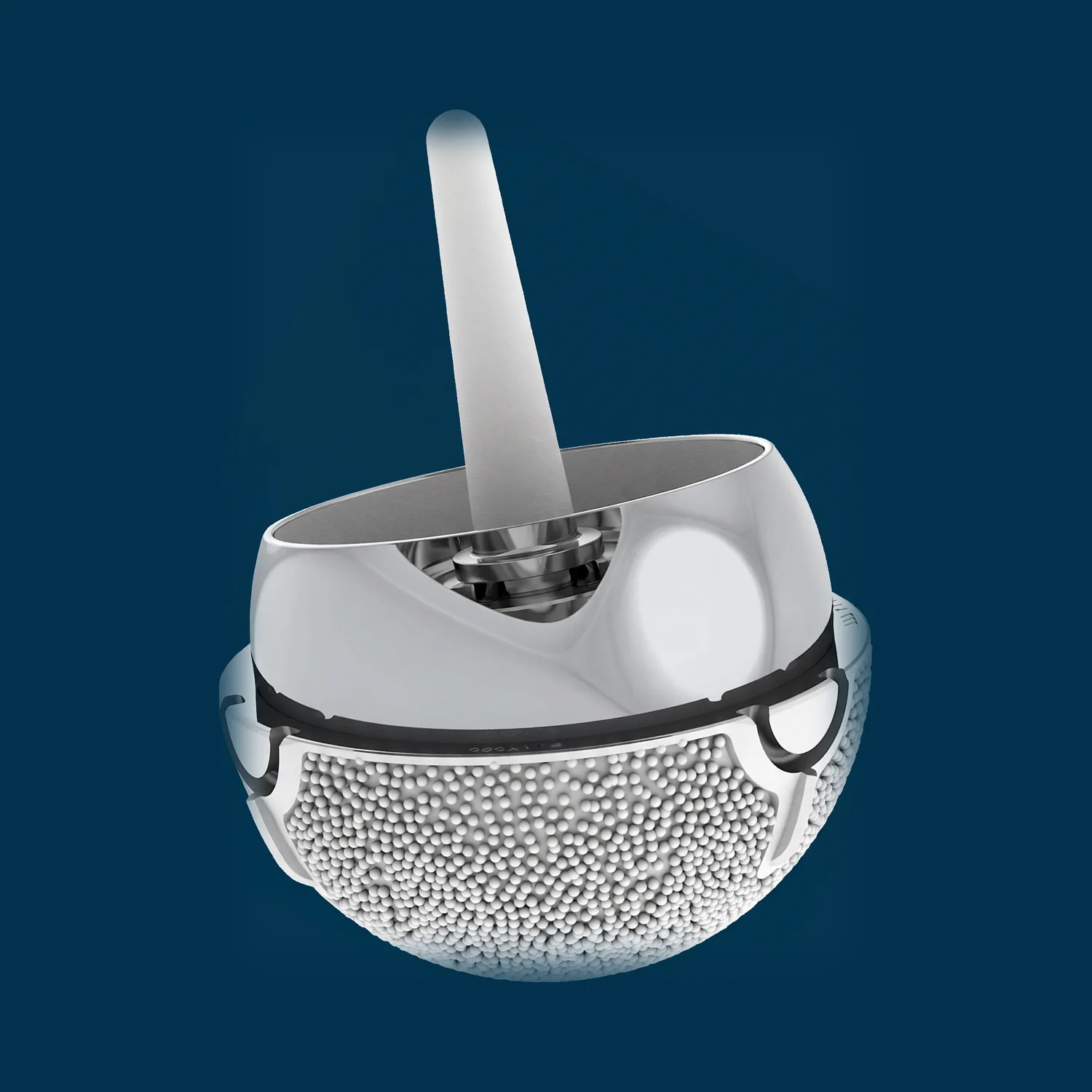
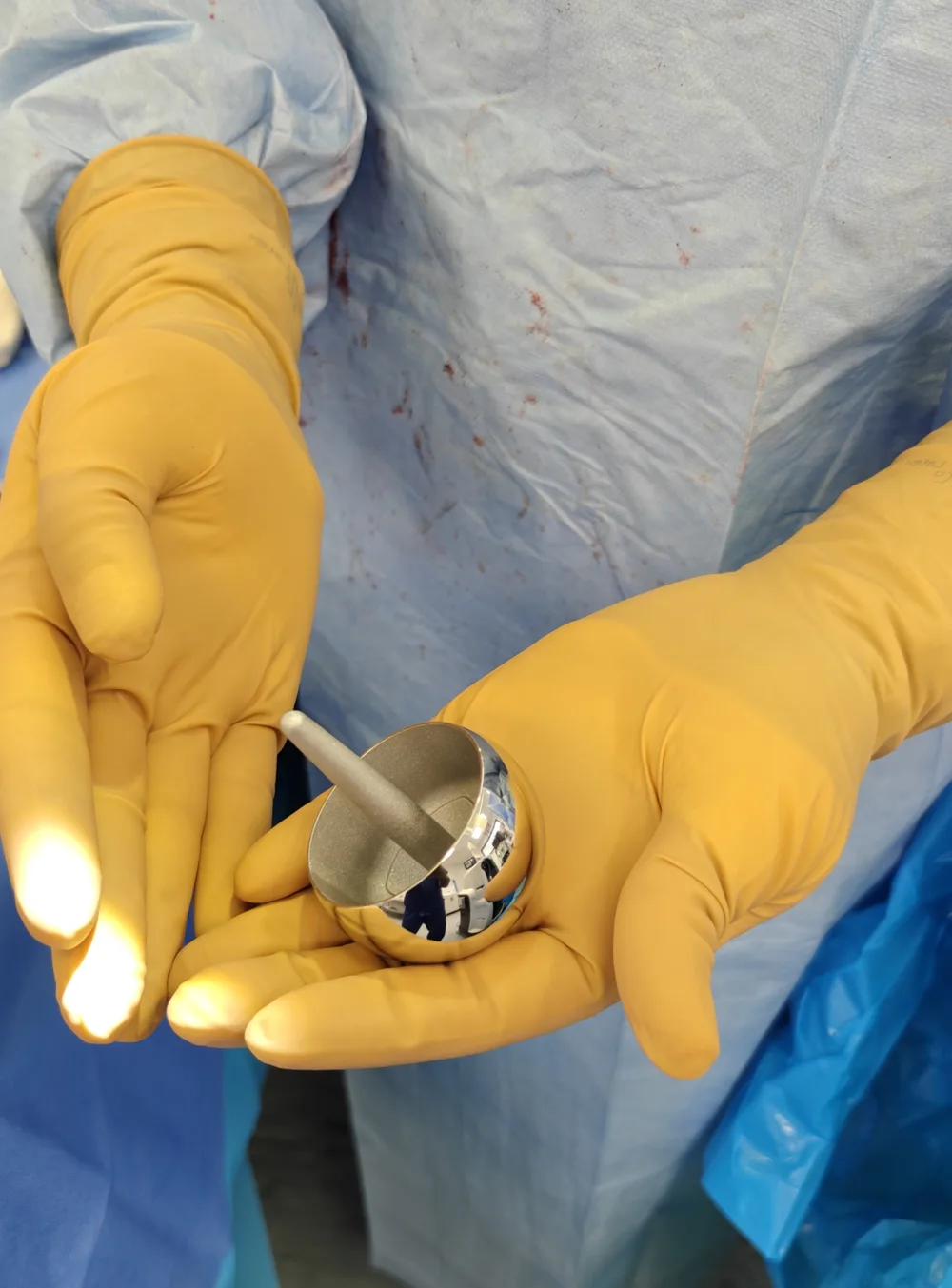
The Adept femoral cap and acetabular cup — the metal-on-metal resurfacing system from MatOrtho.
The femoral component is a thin cap that reshapes the worn surface of the femoral head without resecting it. The acetabular component is a press-fit cup with a hydroxyapatite coating that encourages bony ingrowth and biological fixation, with no requirement for screws in the great majority of patients. The bearing is metal-on-metal: the same cap-on-cup geometry that defined the modern resurfacing operation when it was developed in Birmingham in the 1990s, and that, in carefully selected patients, has continued to deliver excellent long-term results.
Adept is offered today to a defined group of patients: active men with larger native femoral heads, where the long-term data on metal-on-metal resurfacing is unambiguously strong. Indications and contraindications below are the working framework, settled in clinic on the basis of imaging, examination and a frank conversation about activity, life expectancy and tolerance for surveillance.
For the patient who fits the profile, Adept is a confident, evidence-led choice. For the patient who does not, the ceramic options are now real and excellent. The clinic conversation is the right place to settle which is which.
The Adept system entered routine use in 2004 and has been tracked in the National Joint Registry of England, Wales, Northern Ireland and the Isle of Man since shortly thereafter. Long-term published outcomes in the well-selected male patient with a larger native head are consistently among the best for any hip arthroplasty, with low revision rates that compare favourably with stemmed total hip replacement at matched follow-up.
The Orthopaedic Data Evaluation Panel (ODEP) rating system grades hip and knee implants on the strength of their long-term outcomes data. A 15A rating means the implant has at least fifteen years of clinical follow-up with a strong evidence base. Adept holds ODEP 15A in men with 48 to 58 mm heads, which is to say: a documented fifteen-year record in the specific patient profile in whom it is used today.
The decade between 2008 and 2018 saw considerable turbulence in metal-on-metal hip surgery. Several devices, most prominently the DePuy ASR, were withdrawn after independent data revealed unacceptable revision rates, and the MHRA issued repeated alerts that broadened the pool of patients requiring formal surveillance. The dominant risk factors were small bearing diameter, smaller native head size, sub-optimal cup positioning and lower-volume surgeons. Adept used today, in the patient profile its data supports and at the volumes of a specialist centre, sits well outside that risk envelope. The surveillance pathway remains lifelong, which is part of choosing this bearing knowingly.
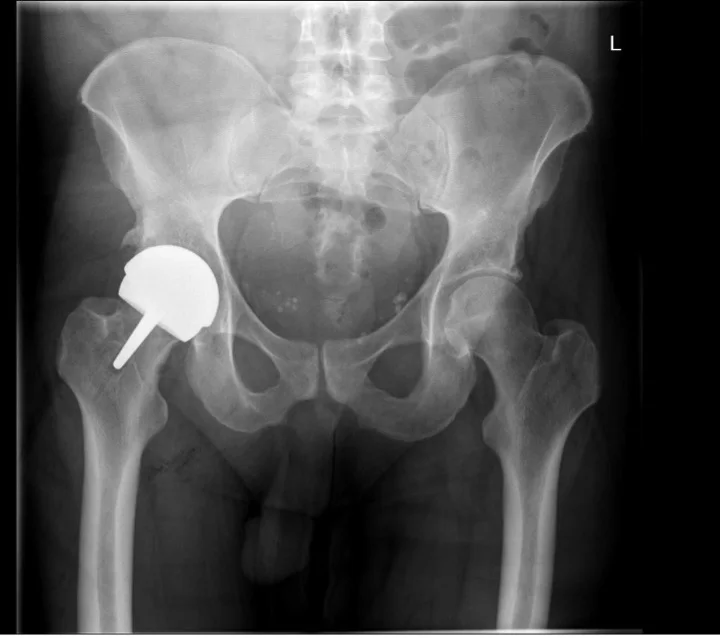
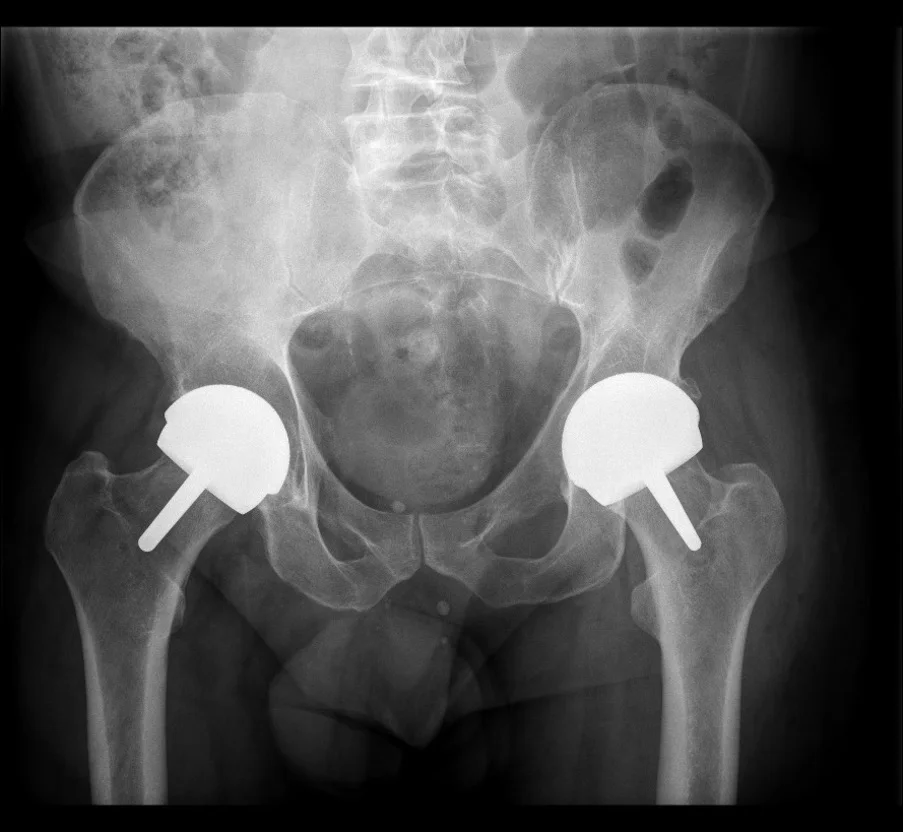
These are X-rays of Adept hip resurfacing cases performed by Mr Hussain. In each, an arthritic hip with lost joint space is restored with an Adept cobalt-chromium resurfacing cap, preserving the femoral head and neck.
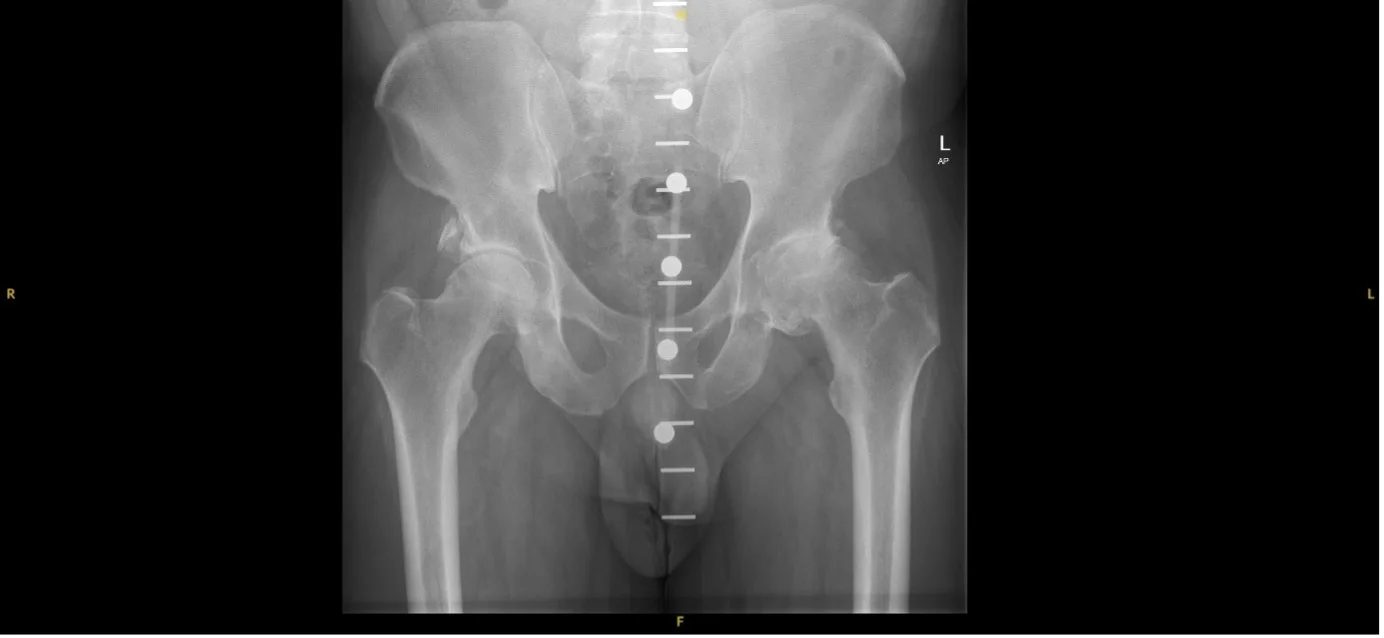 Before
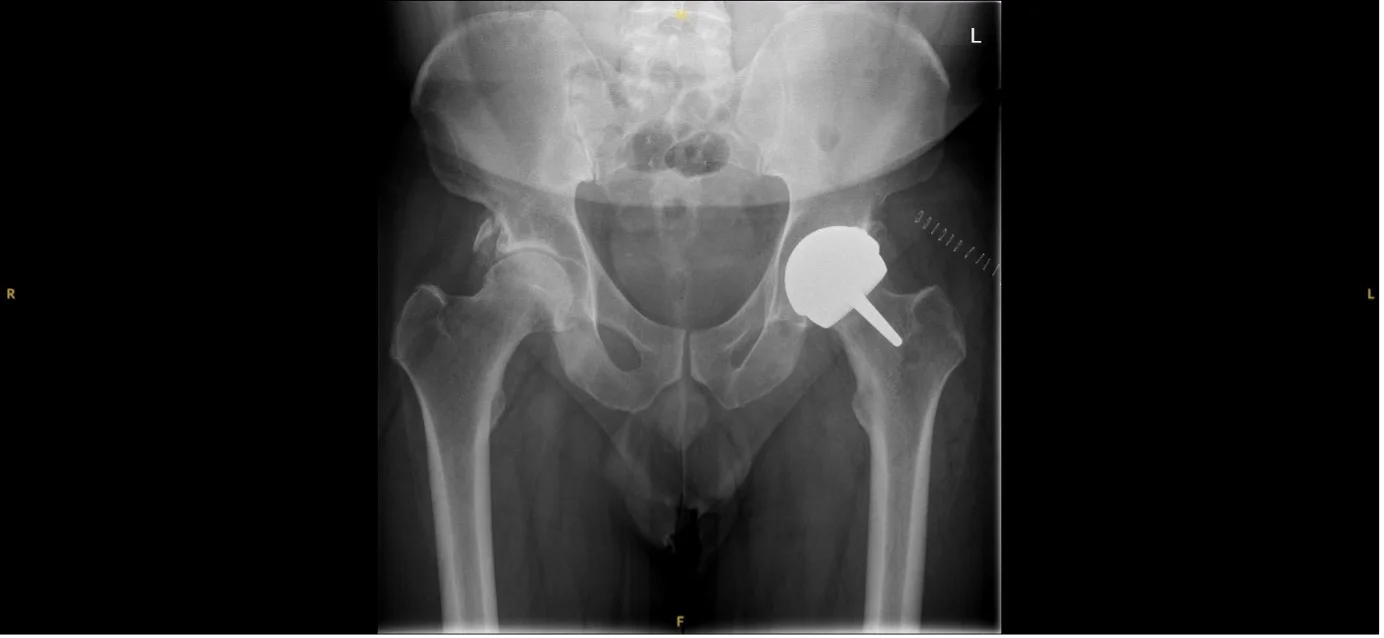 After
After
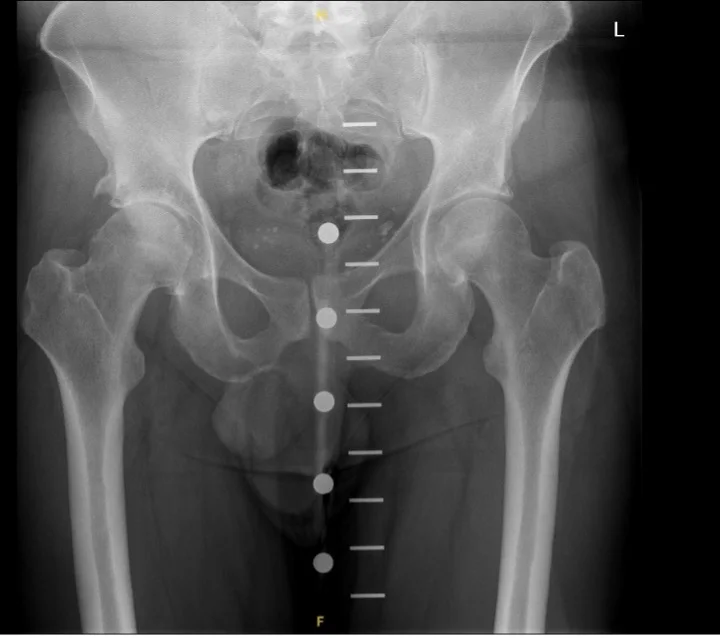 Before
 After
After
Photographs from an Adept resurfacing performed by Mr Hussain. The surgical image is blurred by default — tap it to view. It is shared for education and is not representative of any individual patient.

The introduction of ceramic-on-ceramic resurfacing has not displaced Adept. It has clarified what Adept is for. The conversation in clinic is no longer about which bearing to use by default, but about which bearing best fits the individual hip in front of us. Adept's place in that conversation is precise.
Where the patient profile matches the ODEP-rated indication, and where the patient prefers the longest documented track record on offer, Adept is the strongest evidence-led choice. Where the patient is female, of child-bearing potential, smaller-framed, or simply prefers a bearing chemistry that requires no metal-ion surveillance, the ceramic options are the answer.
The all-ceramic successor to Adept, built by MatOrtho on the same geometry. CE marked 2024 with multicentre five-year outcomes published.
ReCerf detail →The British ceramic resurfacing developed at Imperial College London and made by Embody. A newer ceramic option in the field.
H1 detail →Adept retains the longest mainstream registry record of any hip resurfacing system in current routine use. For active men with larger native femoral heads, the long-term data is excellent, and the bearing choice is supported by years of follow-up that ceramic systems have not yet had time to accumulate. For this defined patient profile, the certainty of long-term outcomes is a real clinical advantage.
When the bearing is matched to the right patient and the surgery is performed at a high-volume centre, modern metal-on-metal resurfacing is safe and durable. The problems of the late 2000s and early 2010s were concentrated in smaller bearing diameters, smaller native heads, sub-optimal cup positioning and lower-volume surgeons. Adept used today, in the patient profile its data supports, sits well outside that risk envelope.
Patients with any metal-on-metal hip remain on lifelong surveillance under MHRA guidance. This typically means annual clinical review with imaging where indicated, and periodic blood cobalt and chromium ion measurement. Most patients have stable, low ion levels and no clinical concern. Where ion levels rise or symptoms develop, the surveillance pathway is well established.
Metallosis is the body's reaction to fine metal debris released by a metal-on-metal hip bearing. It is the family of problems that drove the difficult years of the late 2000s. The risk is real but is concentrated in specific circumstances: smaller bearings, smaller native heads and poorly positioned components. A dedicated metallosis page explains what it is, how it is monitored, and why it matters less for the patient profile in whom Adept is used today.
Yes. Women and patients of child-bearing potential are not offered metal-on-metal resurfacing in this practice. The ceramic-on-ceramic implants, ReCerf and H1, are the appropriate options for these patients and have changed candidacy meaningfully. A dedicated page covers hip resurfacing for women in detail.
A private consultation with weight-bearing imaging is the most useful next step. We will tell you, on your own anatomy, whether Adept is the right bearing or whether a ceramic option suits your hip and your life better.
Book a Consultation