Hip Resurfacing
Over 450 procedures across the Adept and ReCerf implant systems. Patient selection is meticulous: resurfacing is offered only to those for whom the data supports an excellent outcome.
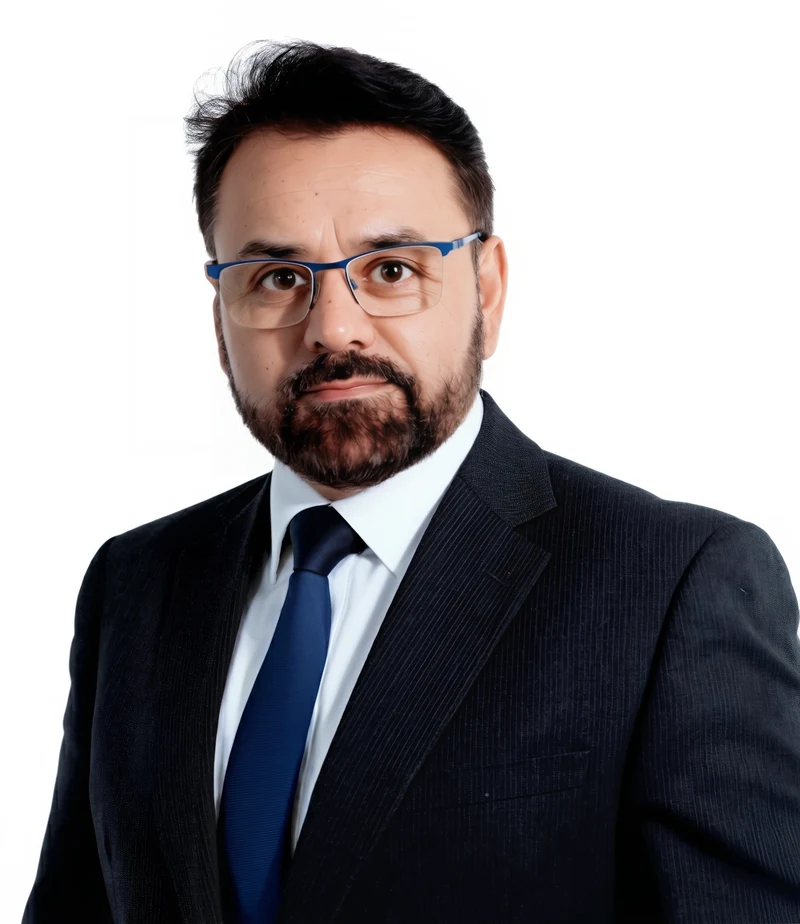
Mr Shakir Hussain is a Consultant Orthopaedic Surgeon at the Royal Orthopaedic Hospital Birmingham and one of the UK's higher-volume hip resurfacing surgeons, with over 450 procedures performed across two implant systems, Adept and ReCerf. Hip resurfacing is the particular focus of his practice, offered to carefully selected, active patients alongside primary and revision hip replacement.
Not every hip surgeon performs resurfacing. It has a steeper learning curve than standard hip replacement: peer-reviewed data show complications more than three times higher in low-volume hands, and consistent component positioning takes around 75 dedicated cases to achieve. Mr Hussain trained in the operation at the Royal Orthopaedic Hospital under Mr Ronan Treacy, co-developer of the Birmingham Hip Resurfacing and one of the most experienced resurfacing surgeons in the world. If you are weighing up your options, our guide to choosing a hip resurfacing surgeon sets out what to look for.

Mr Shakir Hussain with his mentor, Mr Ronan Treacy
Co-developer, Birmingham Hip Resurfacing
Mr Shakir Hussain with Professor Derek McMinn
Inventor, Birmingham Hip ResurfacingMr Hussain's orthopaedic training culminated at the Royal Orthopaedic Hospital in Birmingham — the hospital where hip resurfacing as it exists today was developed. There he trained under Mr Ronan Treacy, learning the operation at its source, case after case alongside the surgeon who helped design it: an apprenticeship very few consultants working today can claim.
He was subsequently awarded a British Hip Society Travelling Fellowship to the ENDO-Klinik in Hamburg, the world's first hospital dedicated entirely to joint replacement surgery. The fellowship focused on complex revision hip surgery, including the management of infected joints. That revision experience matters for resurfacing patients too: a surgeon who regularly revises failed hip implants understands, at first hand, exactly what makes a primary operation succeed or fail — and it shapes how carefully patients are selected and how precisely components are positioned.
Hip resurfacing rewards specialisation. Outcomes in this operation are closely linked to how often a surgeon performs it, which is why Mr Hussain has made it a core focus of his practice. He is one of a small number of UK surgeons offering both a metal-on-metal system (Adept) and a ceramic-on-ceramic system (ReCerf) — which means the implant is chosen to suit the patient, never the other way round. Patients who are not suitable for resurfacing are told so plainly, and offered the alternative with the best evidence for their circumstances.
Mr Hussain sees patients privately at three Birmingham hospitals: the Woodlands Suite at the Royal Orthopaedic Hospital, Priory Hospital Edgbaston (Circle Health Group), and The Harborne Hospital (HCA Healthcare). NHS consultations are at the Royal Orthopaedic Hospital.
Book a Consultation“Total hip replacement is an outstanding operation, but for active patients who want to run, lift, or return to heavy impact sport without anatomical compromise, preserving the femoral head matters. My focus is ensuring patients who are true candidates for resurfacing have access to safe, high-volume care without being turned away prematurely.”Mr Shakir Hussain, Consultant Orthopaedic Surgeon
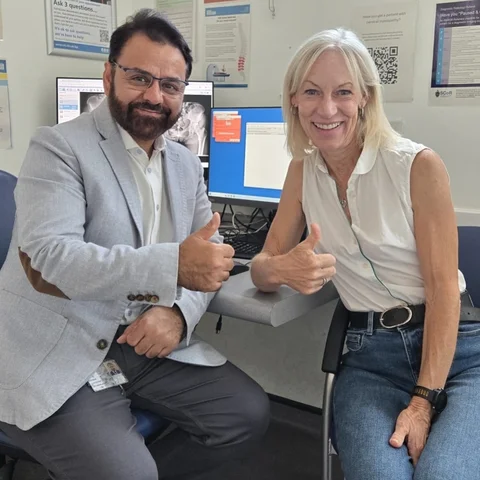
Kathy, 59, is a marathon runner who was offered a total hip replacement without any discussion of alternatives. She had a ceramic-on-ceramic resurfacing with Mr Hussain at the Royal Orthopaedic Hospital: walking on crutches within hours, home within 48 hours, off crutches at four weeks, and running her first parkrun at eleven and a half weeks. Her goal is the Chicago Marathon in 2027.
The practice covers the full range of hip surgery. Three areas receive the greatest focus, reflecting both Mr Hussain's training and the demands of his patient population.
Over 450 procedures across the Adept and ReCerf implant systems. Patient selection is meticulous: resurfacing is offered only to those for whom the data supports an excellent outcome.
For patients whose hip is not suitable for resurfacing, Mr Hussain performs primary total hip replacement at the same three Birmingham hospitals, so the alternative is offered by the surgeon who assessed the hip rather than by a referral elsewhere.
ENDO-Klinik Hamburg fellowship training in revision hip replacement, including the management of infected joints. Referrals accepted for complex revision cases from across the UK.
Mr Hussain consults privately at three Birmingham hospitals, all accepting self-pay and insured patients.
Over 450, across two implant systems — the Adept metal-on-metal resurfacing and the ReCerf ceramic-on-ceramic resurfacing. His total surgical experience exceeds 5,000 procedures, including more than 3,000 joint replacements.
At the Royal Orthopaedic Hospital in Birmingham under Mr Ronan Treacy, co-developer of the Birmingham Hip Resurfacing. He also completed a British Hip Society Travelling Fellowship at the ENDO-Klinik in Hamburg, specialising in complex revision hip surgery.
Yes. He is one of a small number of UK surgeons offering the ReCerf ceramic-on-ceramic hip resurfacing, alongside the established Adept metal-on-metal system. The choice of implant is made with you, based on your anatomy, age and circumstances. Read more about ceramic hip resurfacing.
At three Birmingham hospitals: the Woodlands Suite at the Royal Orthopaedic Hospital, Priory Hospital Edgbaston (Circle Health Group), and The Harborne Hospital (HCA Healthcare). NHS consultations are at the Royal Orthopaedic Hospital.
No — you can refer yourself for a private consultation. Some private medical insurers require a GP referral before authorising treatment, so check your policy first if you plan to use insurance. See fees and insurance for details.