The Hip Resurfacing Procedure

A chronological guide to the hip resurfacing experience, from pre-operative assessment to going home and the first weeks of recovery. Knowing what to expect before you arrive tends to make everything easier.

Home / The Procedure

Preparation

Before the Day

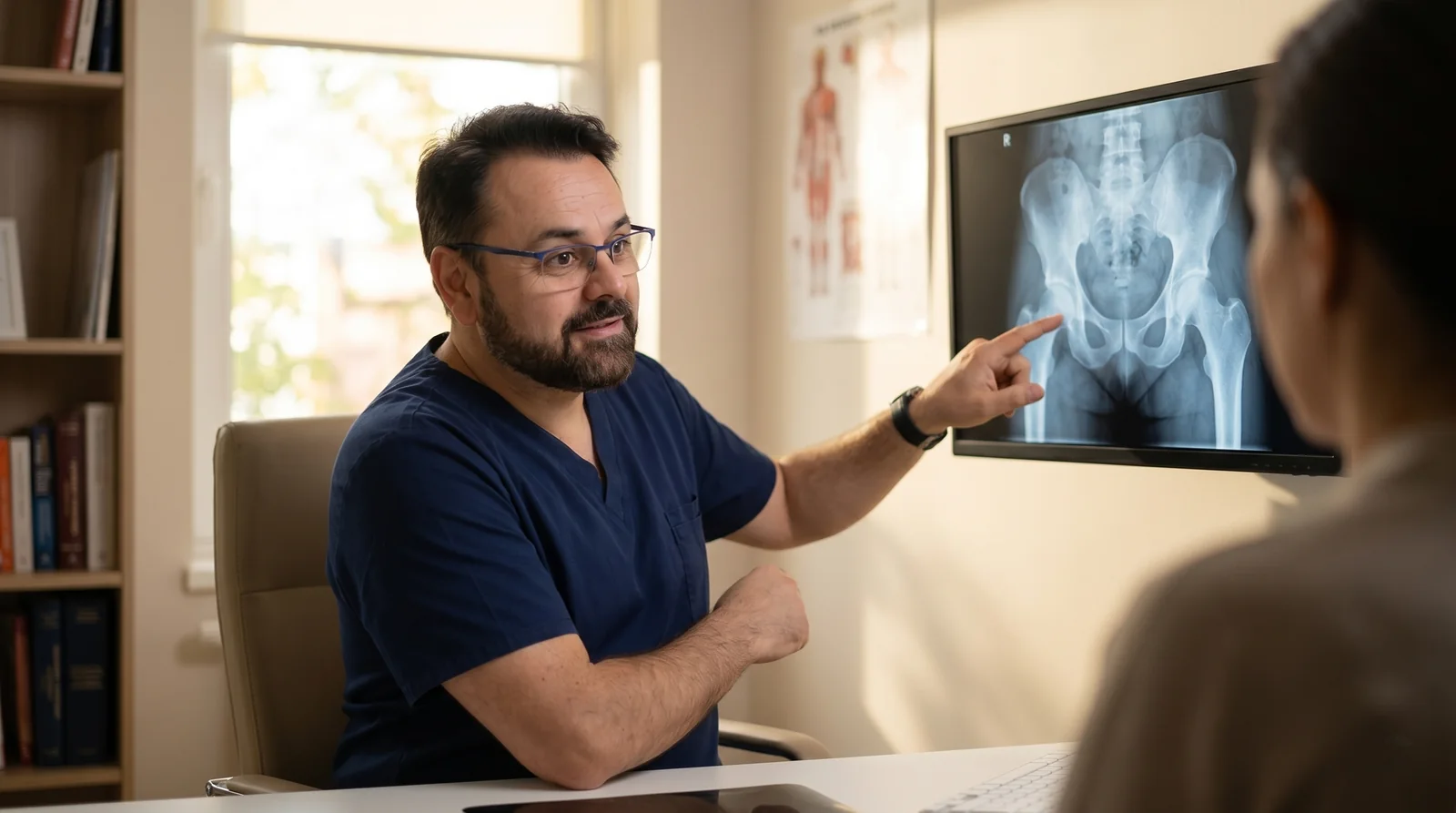
Once the decision to proceed is made and a date is booked, a pre-operative assessment is arranged. This is a standard fitness-for-surgery review, not a second consultation. Its purpose is to confirm that anaesthesia is safe and that nothing has changed since the initial appointment. The session takes around an hour and covers a clinical examination, blood tests, ECG, height, weight and blood pressure. Imaging from the consultation is reviewed at this stage if further templating is needed.
Written fasting instructions are sent ahead of surgery. As a general rule: nothing to eat from midnight; sips of water are permitted right up until just before surgery under the sip-to-send policy. These timings are confirmed in writing, and it matters to follow them exactly as the anaesthetist plans around them.

Practical preparation before the day makes the early recovery considerably easier. Arrange someone to drive you home and to stay with you on the first night. Set up a sleeping area on the ground floor if your bedroom involves stairs. Bring a small overnight bag in case a one-night stay is needed. The complete run-up, from prehab to packing, is on the preparing for hip resurfacing guide.

Takeaway Pre-assessment confirms fitness for surgery. Practical preparation at home makes the first days after discharge considerably more comfortable.
Day of surgery

Arrival and the Hours Before

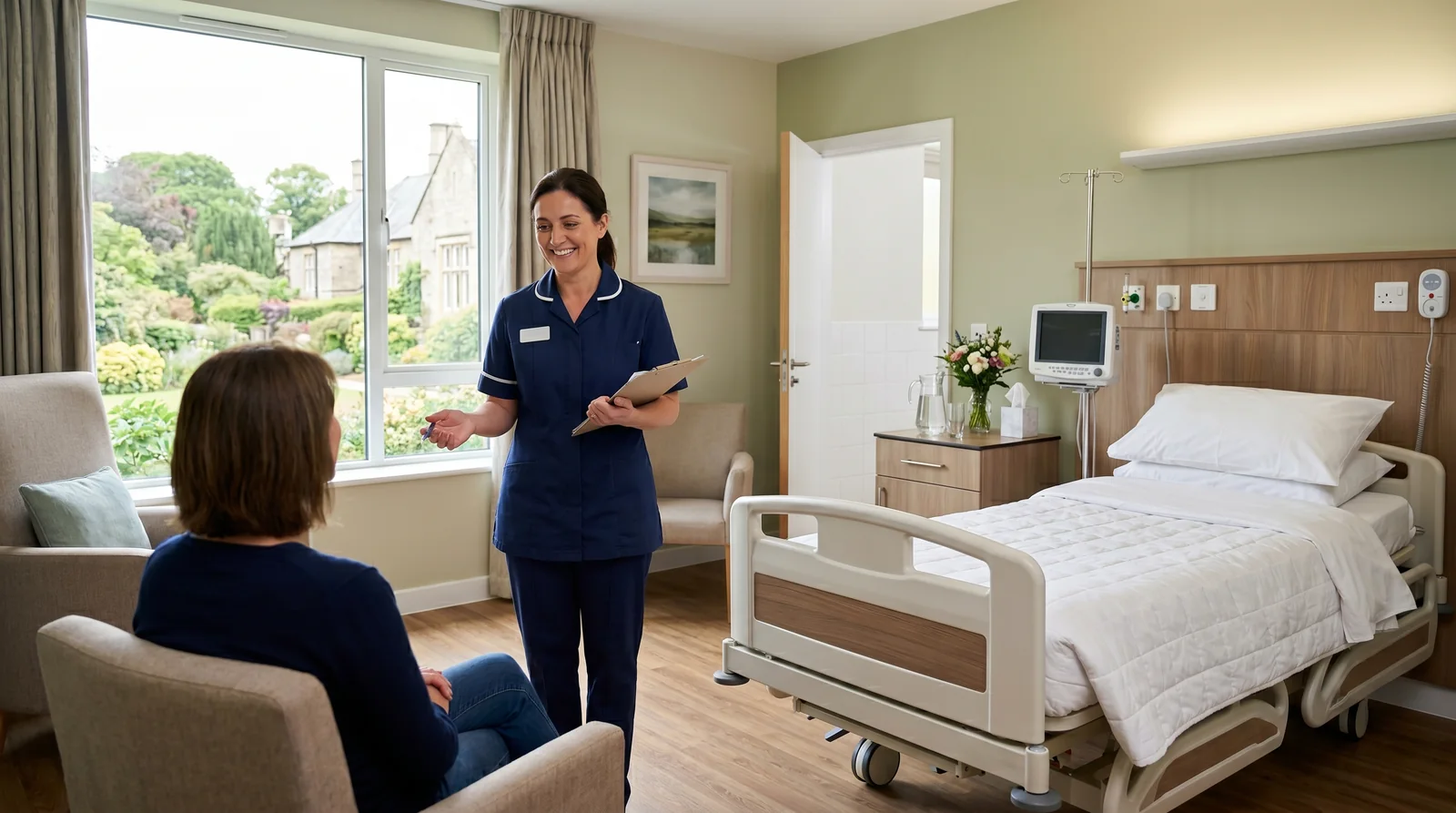
Admission is to the ward, not directly to the operating theatre. The nursing team complete admission observations, confirm the medication list and review the medical history. Mr Hussain visits before the operation to confirm which side is being treated, mark the hip, and answer any final questions. The anaesthetist reviews you separately, and this is when the anaesthetic plan is finalised.

Most patients have a spinal anaesthetic combined with sedation. A spinal is injected into the lower back and numbs the body from the waist down completely; sedation keeps you comfortable and relaxed throughout, and you will not be aware of the operation. General anaesthesia, which produces full unconsciousness, is equally available, and the choice is made together with the anaesthetist based on your medical background and personal preference.

Mr Hussain provides local anaesthetic infiltration during surgery. This provides a valuable layer of pain relief for the first several hours after the operation, overlapping with the oral analgesia prescribed for discharge. Understanding this matters: when the effect wears off, usually four to six hours after surgery, it is important to have oral pain relief on board already rather than waiting for discomfort to arrive before taking it.

Takeaway Spinal anaesthesia combined with sedation is the standard approach. Local anaesthetic infiltration during surgery keeps most patients comfortable through the first evening.

The operation

In Theatre

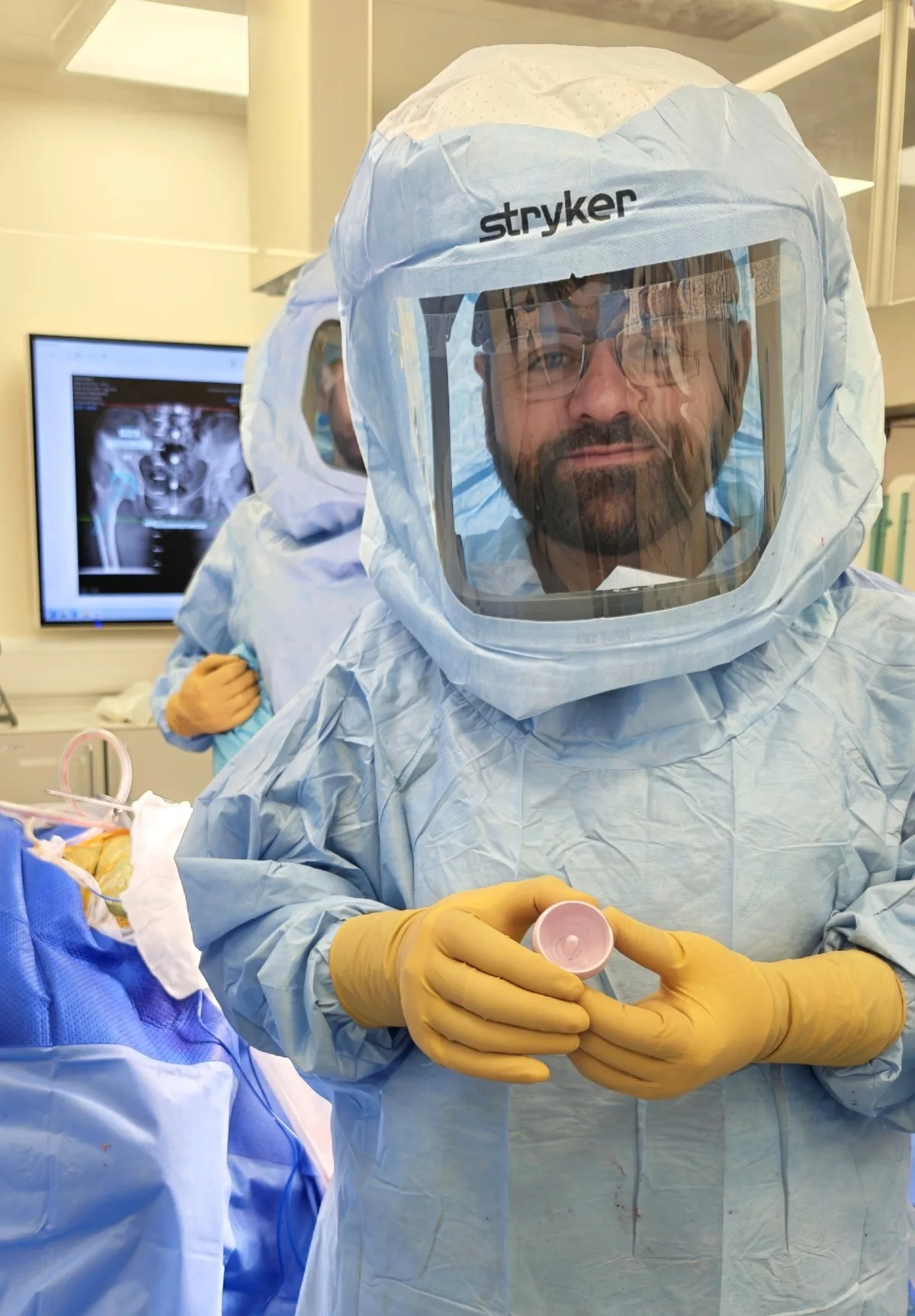
The operation typically takes 60 to 90 minutes. Hip resurfacing is a bone-conserving procedure: the femoral head and neck are preserved in their entirety throughout. The arthritic joint surfaces are removed and replaced, but the underlying bone structure of the upper femur is left intact. That is the central structural difference from a total hip replacement, where the upper femur is opened and a stem is implanted inside the bone canal.

  1. Positioning and incision

    You are positioned on your side. A small, carefully placed incision gives direct access to the joint while minimising disruption to the surrounding musculature.

  2. Exposing the joint

    The hip capsule is opened and the femoral head is gently dislocated from the acetabular socket, bringing the arthritic joint surfaces into clear view. Any loose material within the joint is removed at this stage.

  3. Preparing the femoral head

    The arthritic surface of the femoral head is trimmed and shaped using precision instruments, preserving the underlying bone. A guide pin is set into the head to ensure the implant cap will be positioned correctly in alignment with the femoral neck axis.

  4. Fitting the femoral cap

    The chosen implant cap, metal or ceramic depending on the bearing selected at consultation, is fitted over the prepared femoral head and secured with bone cement. The cap preserves the natural geometry of the femoral head and neck.

  5. Preparing and fitting the acetabular cup

    The acetabular socket is reamed to remove the arthritic surface and prepared to receive the cup. The matching acetabular component is press-fitted into the cleaned socket without cement, relying on bone ingrowth for long-term fixation.

  6. Reassembly, trial and closure

    The femoral head is returned to the socket and range of motion, stability and leg length are checked. Once satisfactory, the wound is closed in layers and dressed. A confirmatory x-ray is taken either later that day or the following morning.

Takeaway The femoral head and neck are preserved throughout. The operation takes 60 to 90 minutes from incision to closure.

After the operation

Waking Up

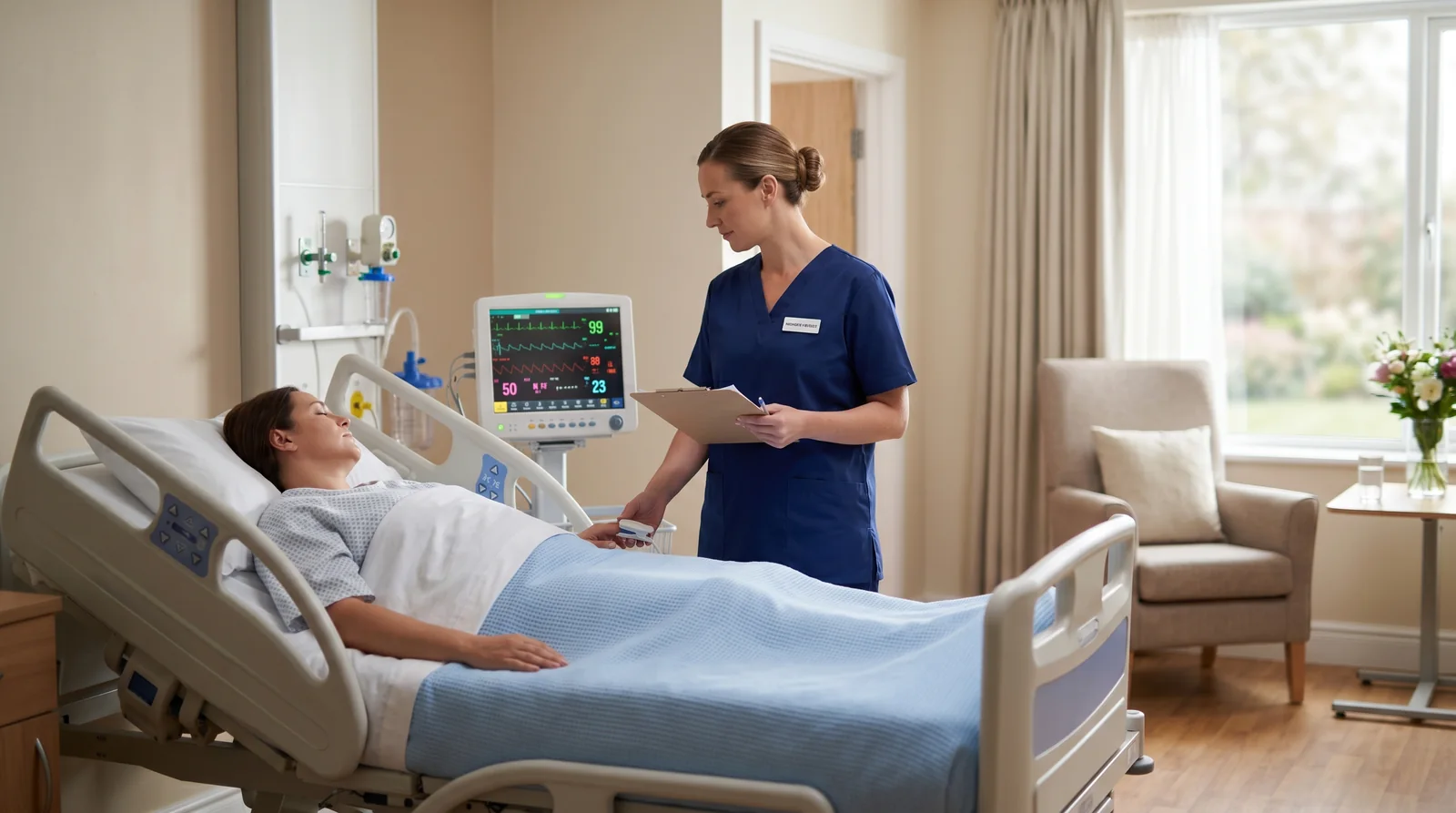
After surgery you move to the recovery room, where the nursing team monitor blood pressure, oxygen levels, pain and sensation as the anaesthetic wears off. For patients who had a spinal anaesthetic, the numbness in the legs fades over one to two hours; for those under general anaesthesia, waking is usually gradual over thirty to sixty minutes. A confirmatory x-ray is taken either later that day or the following morning to check implant position.

Pain is managed actively from this point. The local hip block provides initial coverage and oral analgesia is given on a schedule, rather than waiting for pain to develop. Anti-nausea medication is prescribed alongside. Compression stockings and an anticoagulant injection are given to reduce the risk of deep vein thrombosis; anticoagulant tablets or injections continue at home for several weeks after discharge.

Once observations are stable and the x-ray is satisfactory, you return to the ward. Most patients feel surprisingly comfortable at this stage, largely because of the local block. Eating and drinking can resume as soon as nausea has settled, typically within two to three hours of returning from theatre.

Takeaway Pain is managed on a schedule from the recovery room onward. The local block keeps most patients comfortable through the first evening.

Discharge

Going Home

Hip resurfacing follows an enhanced recovery pathway at all three hospitals, with early discharge the norm for suitable patients. The physiotherapist visits the ward on the day of surgery to begin mobilisation. First steps are taken with two crutches within a few hours of returning from theatre: full weight bearing is permitted from the start. By the time you leave hospital you will be comfortable walking several hundred metres on crutches, able to get in and out of bed, and able to manage a short flight of stairs.

An overnight stay is arranged where it is the safer or more comfortable option. This includes patients who had surgery later in the day, those who live alone without support at home, or anyone whose pain is not settled enough for confident discharge. No one is sent home before it is right to do so.

You leave with a written medication plan covering pain relief and anticoagulation, a wound care instruction sheet, a two-week follow-up appointment, and a direct contact number for questions. The wound is reviewed at two weeks. A physiotherapy programme is arranged or provided in written form for the early weeks at home.

Takeaway Most patients go through enhanced recovery and are discharged early, walking on crutches. Overnight stays are arranged whenever that is the better choice.

Recovery overview

The First Weeks and Months

Recovery from hip resurfacing follows a broadly predictable arc, though the pace varies between patients depending on pre-operative fitness, age and the demands of their lifestyle. What follows is an overview. The full week-by-week timeline, including driving, work and sport, is on the hip resurfacing recovery guide.

Day 1 First Steps

Walking with two crutches, fully weight bearing. Most patients are discharged early under the enhanced recovery pathway.

Week 2 Wound Review

Wound reviewed and any sutures or clips removed. Walking improving steadily; pain settling.

Weeks 3–4 One Crutch

Transition from two crutches to one as confidence and strength return. Short walks increasing in distance.

Weeks 4–6 Crutch-Free

Most patients walking unaided. Driving possible from around four weeks (right hip: typically six weeks).

Weeks 6–12 Low-Impact Activity

Cycling, swimming, walking for distance and golf progressively reintroduced. Return to desk work for most patients.

Months 4–6 Full Activity

Running and higher-impact sport cleared individually once bone integration and functional strength are confirmed.

The pace through these stages is guided by how the hip feels and how strength is returning, not by a fixed calendar. Most patients move through the milestones comfortably ahead of schedule; a small number take a little longer, and both are normal.

Takeaway Most patients are crutch-free by six weeks and back to full activity by six months. The timeline is a guide, not a deadline.

Patient questions

Questions Patients Ask

Will I be awake during the operation?

Most patients have a spinal anaesthetic combined with sedation. The spinal numbs the lower body completely; sedation keeps you comfortable and relaxed throughout, and you will not be aware of the operation. General anaesthesia is equally available, and the choice is made together with the anaesthetist based on your medical background and personal preference.

How long does the operation take?

The operation itself typically takes 60 to 90 minutes. You will be in the anaesthetic room for a short time beforehand and in the recovery room for about an hour after, so the total time away from the ward is usually three to four hours.

How long will I be in hospital?

Most patients go home the same day or the morning after surgery. Day-case discharge is the default pathway for suitable patients at the Royal Orthopaedic Hospital. An overnight stay is arranged where it is the safer or more comfortable choice, and is never rushed.

When can I drive after hip resurfacing?

Driving is possible once you can perform an emergency stop safely and confidently. For a left hip that is usually around three to four weeks. For a right hip the brake reaction needs to return fully first, and most patients are ready at four to six weeks. You must not drive while taking opiate pain relief, regardless of which hip was treated.

How long will I need crutches?

Two crutches for the first two to three weeks, then one crutch for a week or two as confidence builds, then none. The aim is walking unaided by four to six weeks. Some patients progress faster; the pace is guided by how the hip feels rather than by a fixed calendar.

When can I return to sport?

Low-impact exercise such as cycling, swimming and golf is realistic from six to twelve weeks. Running and high-impact sport are cleared individually from around six months, once the bone has fully incorporated the implant and functional strength has returned. The Patient FAQ page covers sport and activity in more detail.

Next step

Ready to Move Forward


If you would like to know whether hip resurfacing is the right operation for you, the most useful step is a private consultation with imaging review. You will leave with a clear answer and a plan.

Book a Consultation