MatOrtho
ReCerf
MatOrtho's all-ceramic successor to the Adept, built on its proven geometry, with five-year outcomes now published.
Explore the ReCerf implant →
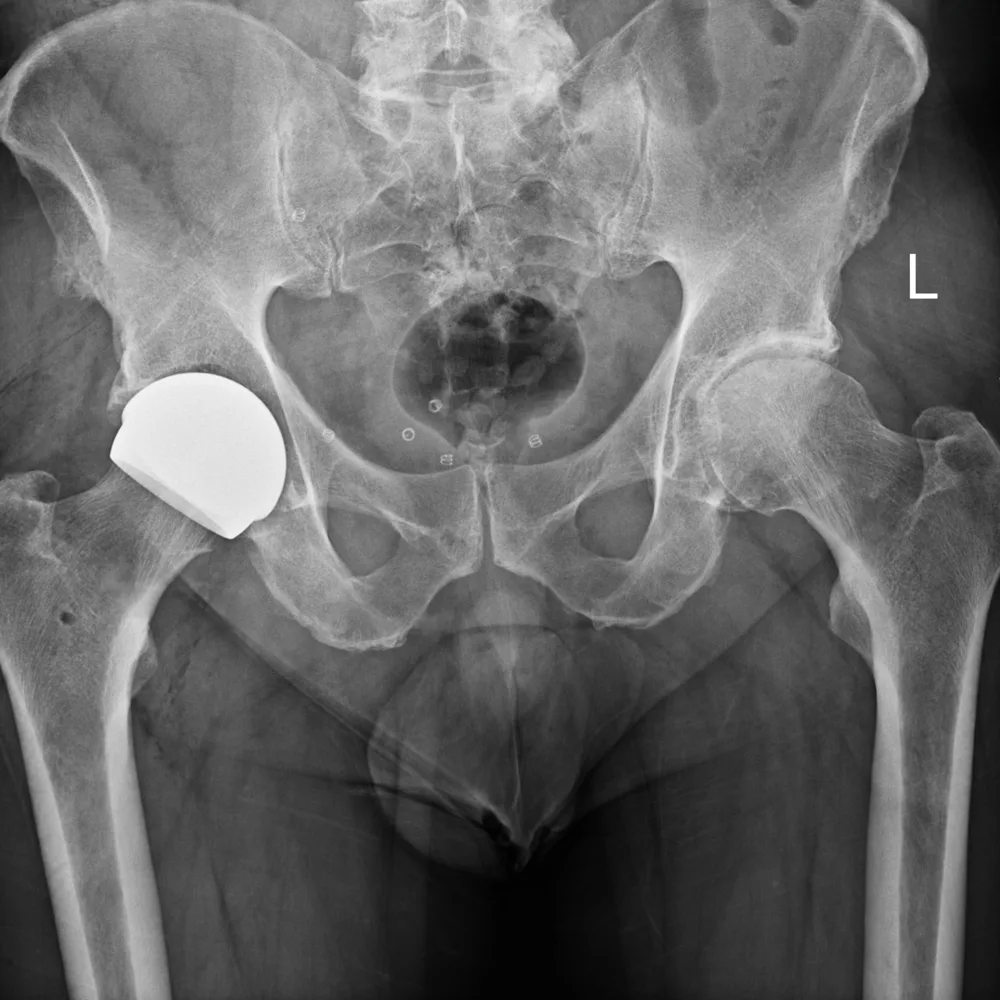
Ceramic hip resurfacing is a bone-conserving alternative to a total hip replacement. As in every hip resurfacing, the femoral head and neck are kept: the head is reshaped and capped, and the socket receives a matching cup. Your natural bone is preserved, and the large ceramic bearing gives the hip the stability an active life demands.
Because both bearing surfaces are ceramic, the bearing releases no cobalt or chromium ions, so the lifelong blood monitoring that comes with a metal bearing is simply not needed. Mr Shakir Hussain has performed more than 400 hip resurfacings, and private patients are typically seen within days and operated on within weeks.
Mr Shakir Hussain consults at three Birmingham hospitals: the Woodlands Suite at the Royal Orthopaedic Hospital, Priory Hospital Edgbaston and The Harborne Hospital. Surgery and aftercare follow the same standard at each; choose the location that suits you best, and imaging can be arranged on the day of your consultation.
The difference is the material the two moving surfaces are made of, and everything that follows from it. A metal-on-metal bearing releases small amounts of cobalt and chromium as it wears, which is why patients who choose it accept lifelong blood-ion surveillance, one of the complications and risks weighed before surgery. A ceramic-on-ceramic bearing releases no metal ions at all, so the surveillance question falls away entirely, and with it the reasons the operation was restricted for women and smaller-framed patients.
| Ceramic resurfacing | Metal-on-metal resurfacing | |
|---|---|---|
| What the bearing is made of | Ceramic cap on ceramic cup | Cobalt-chromium cap on cobalt-chromium cup |
| Metal ions in your blood | None from the bearing | Measurable cobalt and chromium ions |
| Blood tests after surgery | Not needed | Lifelong periodic blood-ion checks |
| Best suited to | Most resurfacing candidates, including women and smaller frames | Active men with larger native femoral heads |
| Return to sport | Running, hiking and impact sport, cleared individually from months 4 to 6 | The same active return, once cleared |
| Track record | Newer bearing; follow-up accumulating | Decades of registry follow-up |
| Implant used | ReCerf and H1 | Adept |
| Fixed self-pay price | £13,450 at ROH private care | £12,250 at ROH private care |
The honest trade Ceramic removes the metal-ion question; metal-on-metal offers the longer documented track record. Neither is universally better, and the full story of the older bearing, told plainly, is on the metal-on-metal page.
Ceramic resurfacing suits people who want the bone preservation, stability and activity levels of a resurfacing, but for whom a metal bearing is either unsuitable or unwanted. In practice that describes most of the patients the metal era excluded, and a growing share of those it did not.
Suitability Whether a resurfacing of any kind is right for you rests on your bone quality, anatomy and goals, assessed on imaging and examination. Start with am I a candidate?
Yes, and this is one of the clearest gains of the ceramic era. Metal-on-metal resurfacing performed poorly below a 48 mm femoral head, which excluded most women and many smaller-framed men. The ceramic ReCerf is manufactured down to a 40 mm head, so hips that were once steered automatically to total hip replacement can now be resurfaced.


The practical effect is that more patients are now considered for hip resurfacing rather than hip replacement, keeping the femoral head and neck and the bone-preserving advantages that come with them. For the considerations specific to women, see hip resurfacing for women.
Mr Hussain does not believe in a one-size-fits-all approach. He offers two ceramic-on-ceramic resurfacing systems, the ReCerf and the H1, and at your consultation he will review your anatomy and bone quality to recommend the implant likely to give your hip the best long-term result.
MatOrtho's all-ceramic successor to the Adept, built on its proven geometry, with five-year outcomes now published.
Explore the ReCerf implant →The British ceramic resurfacing developed at Imperial College London, with a monoblock, anatomically contoured design.
Explore the H1 implant →He also continues to offer the metal-on-metal Adept for the patients it still suits, and all three systems are compared side by side on the implants overview.
Ceramic (ReCerf) hip resurfacing costs £13,450 as a fixed-price, all-inclusive self-pay package at Royal Orthopaedic Hospital private care (The Woodlands Suite). That single figure covers Mr Hussain's surgical fee and the anaesthetist's fee, the implant itself, theatre time, your hospital stay, in-patient physiotherapy and routine post-operative follow-up. Packages at Priory Hospital Edgbaston and The Harborne Hospital are quoted individually. The £250 initial consultation is charged separately, and your written, itemised quotation is confirmed after your consultation.
Insured patients do not need the package at all: hip resurfacing is covered by most comprehensive UK private medical policies where it is clinically indicated. Mr Hussain is recognised by Bupa, AXA Health, Vitality, Aviva, WPA and Cigna, and corporate and Police Mutual (Healix) schemes are also accepted. Once you have a GP referral, your insurer issues a preauthorisation number before your consultation; the step-by-step guide for each insurer is on the insurance page, and the self-pay breakdown is on the fees page.
A written quotation takes one consultation. Bring your X-rays if you have them; if not, imaging is arranged on the day.
Book a ConsultationCeramic hip resurfacing is a young procedure performed by a small number of UK surgeons, concentrated in specialist hip units. Mr Shakir Hussain performs it in Birmingham, consulting at the Woodlands Suite of the Royal Orthopaedic Hospital, Priory Hospital Edgbaston and The Harborne Hospital, and patients travel from across the UK for the operation.
His resurfacing practice continues a specific Birmingham tradition: he was trained in hip resurfacing by Mr Ronan Treacy, co-designer of the Birmingham Hip Resurfacing. Across the metal and ceramic eras he has performed more than 400 hip resurfacings, and the Royal Orthopaedic Hospital was the setting for milestones in the ceramic era, including the first woman to receive a ceramic hip resurfacing at the ROH.
At 57 and still very active, hip resurfacing seemed the best option for me. From the moment I first mobilised after surgery, the hip felt stable, natural and secure. I was able to walk 1 mile after 2 weeks, progressing to 5 miles pain-free after 5 weeks. I have also returned to cycling and swimming.
NHS availability of hip resurfacing varies by region and by trust, and the ceramic implants are a recent addition to the operation. In practice, ceramic hip resurfacing in the UK is currently offered mainly through private care. Mr Shakir Hussain performs it in Birmingham as a fixed-price self-pay package, and most comprehensive private medical insurance policies cover hip resurfacing where it is clinically indicated.
No routine metal-ion blood monitoring is needed after ceramic hip resurfacing, because a ceramic-on-ceramic bearing does not release cobalt or chromium ions. This is one of the main differences from metal-on-metal resurfacing, which involves lifelong periodic blood checks. You will still have routine post-operative follow-up with X-rays, as after any hip operation.
Yes. The ceramic bearing is the development that reopened hip resurfacing to women. Metal-on-metal resurfacing is not recommended for women of child-bearing potential and performed less well in smaller hips, so for many years most women were steered towards total hip replacement. Ceramic resurfacing removes the metal-ion question and is manufactured in sizes that fit smaller anatomy, so suitability now rests on bone quality and anatomy rather than sex. The full picture is on the for women page.
Ceramic resurfacing implants are newer than metal-on-metal, so they do not yet have the decades of registry follow-up that older bearings have accumulated. Modern medical-grade ceramic is a hard-wearing bearing material with a long history in total hip replacement, where it has been used for decades and wears extremely slowly. Every ceramic resurfacing performed in this practice is followed up over the long term, and the honest state of the evidence is discussed openly at consultation.
With Mr Shakir Hussain in Birmingham, ceramic (ReCerf) hip resurfacing costs £13,450 as a fixed-price, all-inclusive self-pay package at Royal Orthopaedic Hospital private care: the surgeon's and anaesthetist's fees, the implant, theatre time, hospital stay, in-patient physiotherapy and routine post-operative follow-up. Packages at Priory Hospital Edgbaston and The Harborne Hospital are quoted individually. The £250 initial consultation is charged separately, and insured patients can use most major UK private medical insurers.
Suitability is decided on your imaging and examination, not a web page. Mr Hussain will review your hip and tell you plainly whether ceramic resurfacing is right for you, and if not, what is.
Book a Consultation