The Birmingham Hip Resurfacing

The implant that carried hip resurfacing around the world was designed and made here in Birmingham. This is its story — and what has taken its place.

Home / Articles / The Birmingham Hip Resurfacing

First, the name

An Implant, an Operation, and a City

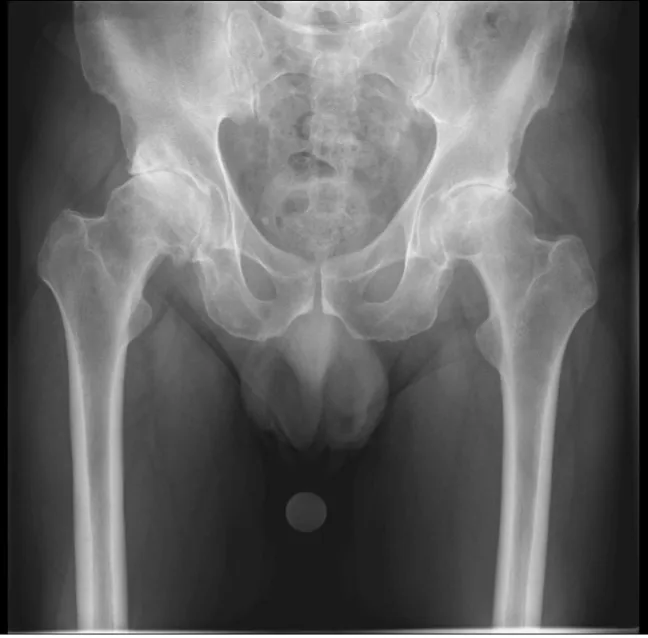
Patients arrive in my clinic using the phrase "Birmingham hip" to mean three different things. Some mean the specific implant, the Birmingham Hip Resurfacing, or BHR, designed and manufactured in this city. Some mean the operation of hip resurfacing in general, because the BHR became so dominant that its name swallowed the procedure. And some simply mean having their hip done in Birmingham. All three are reasonable, and the confusion is worth untangling, because what is true of one is not always true of the others.

This article is about the first meaning: the implant itself. Where it came from, why it mattered, why its use was restricted in 2015, what the longest follow-up studies now show, and what I offer in its place today. If you were told years ago that you were "getting a Birmingham hip", or you have read that it was withdrawn and want to know what that means for you, this is the story in full.

1991 to 1997

Made at the Royal Orthopaedic

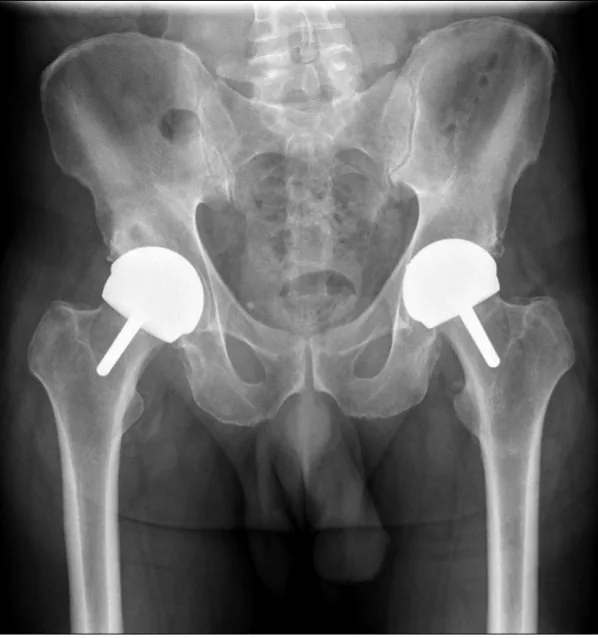
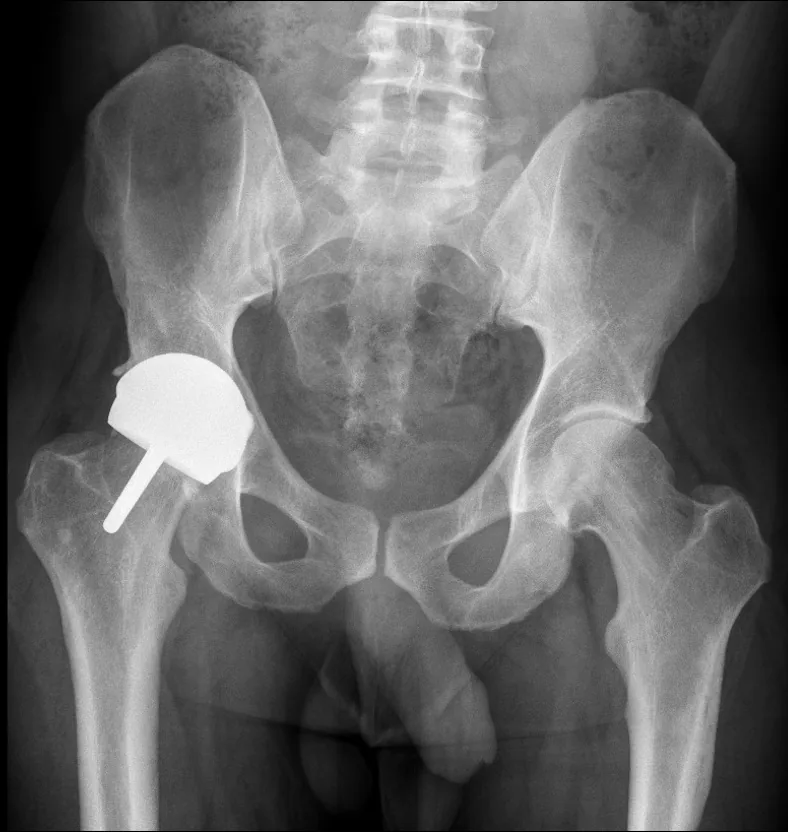
The BHR was born out of a problem that total hip replacement could not solve: what to offer the active fifty-year-old whose stemmed implant would likely wear out within their lifetime. Through the early 1990s, Derek McMinn developed a series of metal-on-metal resurfacing prototypes at the Royal Orthopaedic Hospital, the same hospital where I consult and operate today. Working with Ronan Treacy, the design matured into the Birmingham Hip Resurfacing, first implanted in July 1997.

Three engineering decisions defined it. The bearing was cast from high-carbon cobalt-chromium in its "as-cast" state, a metallurgy chosen deliberately to resist wear. The femoral head was kept large, close to the size of the patient's own, so that a film of joint fluid could form between the surfaces and keep the metal from grinding on metal. And the femoral neck was preserved entirely, keeping the bone stock and natural biomechanics that make resurfacing worth doing in the first place. None of this was radical in isolation; together, it produced the first resurfacing implant reliable enough to be used at scale.

The wider story of how resurfacing rose, fell and rose again over a century is told in my history of hip resurfacing. The short version is that the BHR was the implant that finally made the old idea work.

The 2000s

The Implant That Went Around the World

Through the 2000s the BHR became the most widely used resurfacing implant in the world, with well over a hundred thousand implanted. It received approval in the United States in 2006, an unusual distinction for a British-designed hip, and "Birmingham hip" entered the vocabulary of patients from Sydney to San Francisco. Professional athletes returned to sport on it, and it carried this city's name with it everywhere it went.

The results in the right patients were genuinely good. Registry data through the decade showed the BHR performing strongly in younger, active men with larger bones, the group it fitted best. But the same registries were quietly recording something else: in patients with smaller bones, who needed smaller components, the failure rate climbed. A smaller metal head struggles to maintain its protective fluid film, wears faster, and sheds more metal debris into the surrounding tissue. Smaller components meant, for the most part, women.

2015

Why Its Use Was Restricted

By the early 2010s, the wider metal-on-metal reckoning, recounted in full on my metallosis page, had put every metal bearing under registry scrutiny. The BHR fared far better than the worst designs, but the size effect was undeniable. In 2015 the manufacturer, Smith & Nephew, acted on its own registry analysis: the BHR was withdrawn from use in women altogether, femoral head components of 46 mm and smaller were removed from the market, and the 48 mm size was advised against. What remained was the implant's core constituency, men with femoral heads of around 50 mm or larger.

It is important to say what this was and was not. It was not a recall of a failing implant from the patients who had one; a well-functioning BHR in a well-selected patient remained, and remains, a well-functioning hip. It was a narrowing of who should receive a new one, driven by honest registry evidence. The narrowing, though, proved terminal for the implant commercially. With its market reduced to a fraction of its peak, Smith & Nephew has now ceased production of the BHR and is phasing the implant out, with remaining stock largely reserved for high-volume resurfacing specialists. Most patients today encounter the Birmingham Hip Resurfacing as something they read about rather than something they are offered.

The long view

What 25 Years of Follow-Up Shows

The BHR is now the best-studied resurfacing implant in history, and in 2024 the original cohort, the very first 144 hips resurfaced in 1997 and 1998, was reported at 25 years in The Bone & Joint Journal. The numbers tell the whole story of the implant in two lines.

89.5%
implant survival in men at 25 years
66.9%
implant survival in women at 25 years

Nearly nine in ten male patients from the original series still had their resurfaced hip a quarter of a century later, a result that stands comparison with the best total hip replacements in young patients. In women, a third had required revision. The 2015 restriction, in other words, was written in the data from the very first cohort; it simply took 18 years of honest follow-up to read it. The study's conclusion was measured and fair: in younger, active male patients, the BHR remains a durable alternative to total hip replacement.

For me that 25-year figure is the single most important fact in modern resurfacing. It proves the principle beyond argument: resurfaced hips can last a working lifetime. The task that remained was to extend that durability to everyone else, and that required changing the material.

2026

What I Offer in Its Place

I practise resurfacing in the city that made the BHR, at the hospital where it was developed, and its legacy shapes my implant choices directly. For the patients the BHR fitted best, larger-boned men, I use the Adept, a metal-on-metal resurfacing of the same design lineage; with the BHR itself now out of production, the Adept carries that lineage forward. The metal bearing in that group is not a compromise; it is the bearing with the 25-year evidence behind it, applied with the same selection discipline the BHR's own data demands.

For everyone the BHR was closed to, the answer is ceramic. The ReCerf and H1 ceramic-on-ceramic implants release no cobalt or chromium, so the metal-ion problem that ended the BHR era for women and smaller patients simply does not arise. That is what has reopened resurfacing for women, including at smaller component sizes the BHR could never safely reach. Whether any resurfacing suits you is a separate question, one of bone quality, anatomy and activity, which is covered on the candidacy page.

So the honest summary of the Birmingham Hip Resurfacing is this: it proved, beyond doubt and over 25 years, that resurfacing works. Its restriction was not the failure of an idea but the refinement of one. And the implants I use today, metal for the few and ceramic for the many, are its direct inheritance.

If you were offered a Birmingham hip years ago, or turned away from one, your options in 2026 are almost certainly wider than you think.

Book a Consultation
The story in dates

The BHR in Seven Dates

1991 to 1997

Development in Birmingham

Derek McMinn develops metal-on-metal resurfacing prototypes at the Royal Orthopaedic Hospital; with Ronan Treacy the design becomes the Birmingham Hip Resurfacing.

July 1997

First implantation

The first BHR is implanted in Birmingham. The first 144 hips from 1997 to 1998 become the most closely followed cohort in resurfacing history.

2006

US approval

The BHR gains FDA approval, and metal-on-metal resurfacing reaches its global peak in the years that follow, with the BHR the most used design worldwide.

2010

The metal-on-metal reckoning

The recall of a rival implant, the DePuy ASR, puts all metal bearings under scrutiny. The BHR performs far better in the registries, but smaller sizes show elevated failure rates.

2015

The restriction

Smith & Nephew withdraws the BHR for women and removes sizes 46 mm and below. The implant continues in selected men, typically with femoral heads of 50 mm or larger.

2024

The 25-year verdict

The original cohort is reported at 25 years: 89.5% implant survival in men, 66.9% in women. The principle is vindicated; the size and sex effect is confirmed.

2025 onwards

The sunset

With demand a fraction of its peak, Smith & Nephew ceases production and begins phasing the BHR out, remaining stock going chiefly to high-volume specialist centres. Its design lineage continues in the Adept; its bone-preserving idea continues in ceramic.

Further reading

Where to Go Next

Next Step

Resurfacing, Here Where It Began


Birmingham remains one of the few places in the world offering the full range of modern resurfacing, metal and ceramic, with the experience the operation demands. A consultation with imaging review will tell you plainly whether it suits your hip.

Book a Consultation