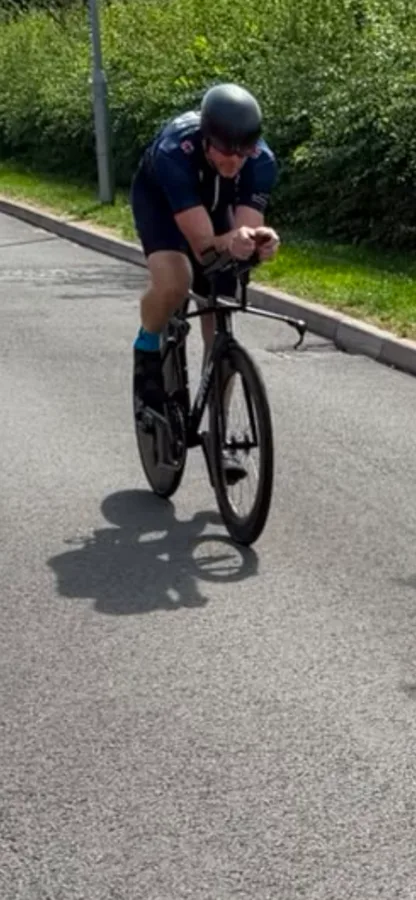
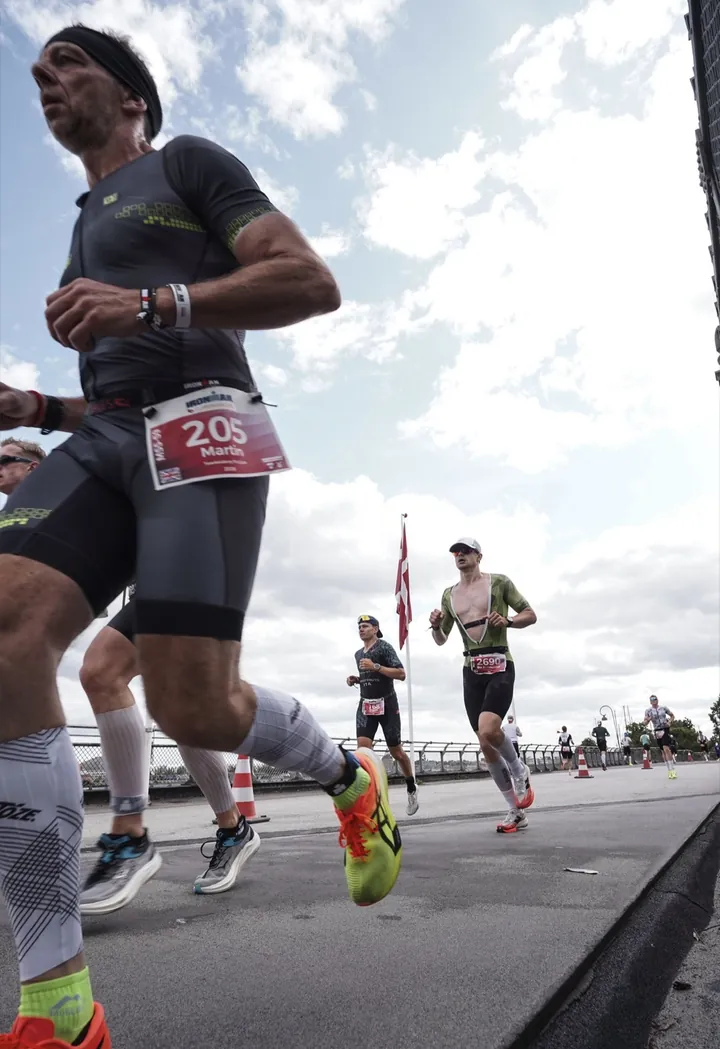
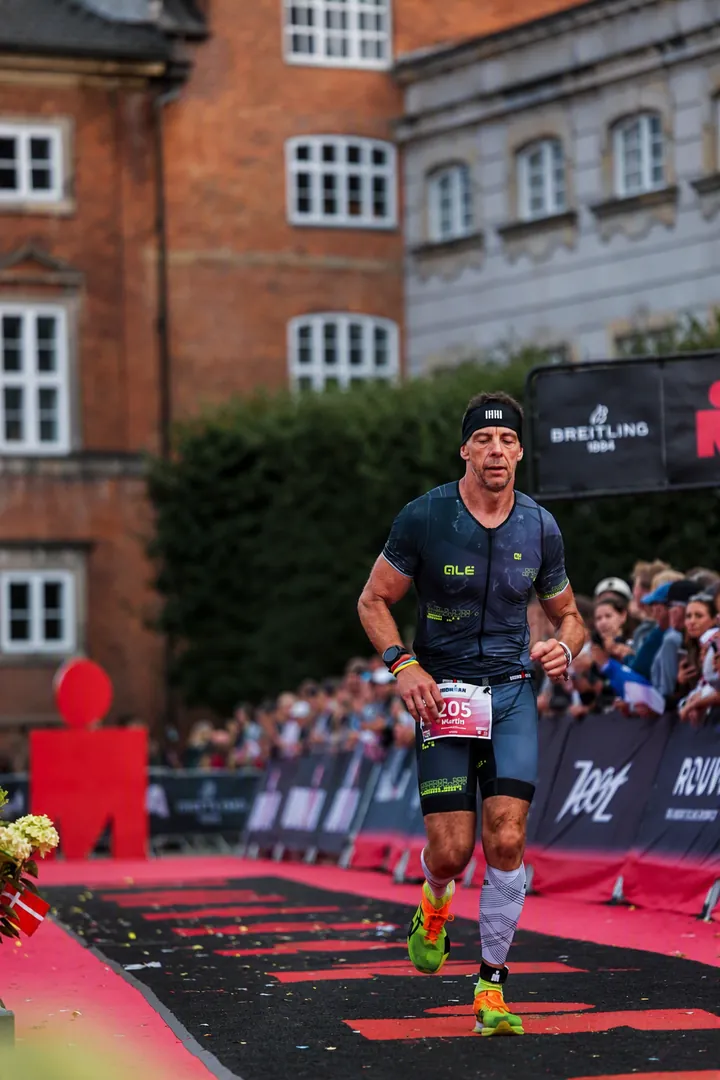
Martin has been competing at something for most of his adult life: mountain bike racing, martial arts, then gym cross-training competitions that took him overseas and, at his peak, to what he describes as a top-five national ranking. When his father passed away, he looked for a different kind of challenge and a way to raise money for charity, and in 2015 he went straight into the full Ironman distance: a 3.8 km swim, 180 km on the bike, and a full 42.2 km marathon to finish.
He has since completed six Ironman races across the UK and Europe. His standing ambition is the one every long-course triathlete recognises: qualifying for the World Championships in Hawaii.
In early 2024, while training for that August's Ironman Copenhagen, Martin became aware of a problem in his hip and groin. Like many athletes, he raced anyway.
"I still raced, but I wouldn't recommend running a marathon needing hip surgery."
Martin, writing to Mr HussainAfter the race he went to his GP, and the referral pathway brought him to Mr Shakir Hussain and his team at the Royal Orthopaedic Hospital in Birmingham. For an endurance athlete in his situation, the question was never simply how to get rid of the pain; it was how to keep the life the pain was taking away. That distinction is exactly what separates hip resurfacing from conventional replacement for active patients, and it is what drew him to the operation.
"I was interested in the resurfacing as I'm not ready to give it all up yet, and believed this would give me the best chance. Mr Hussain was very enthusiastic, and I was immediately put at ease with his knowledge that this was the best route for someone active."
Martin, writing to Mr HussainWhether resurfacing is the right route depends on bone quality, anatomy and activity goals, which is why every patient starts with the same candidacy assessment Martin had.
Martin had his hip resurfaced in February 2025. His account of the experience is characteristically direct: staff at the ROH were friendly and professional from day one, and Mr Hussain found time to talk to him before the operation. He is equally direct about the morning after.
"The next day, I have to admit, I was considering my life choices. But the ward were just as excellent, and soon I was recovering at home."
Martin, writing to Mr HussainThe first days after hip surgery are hard, including for very fit patients, and pretending otherwise helps nobody. What matters is the trajectory. Martin eased into physiotherapy, then week by week added the gym, swimming and cycling, with running deliberately held back until around six months, the final step in a staged return. That sequence, building load progressively and letting the bone adapt before impact, is the pattern described in our week-by-week recovery guide and the article on returning to running after hip resurfacing.
Resurfacing is a volume game: outcomes track surgeon experience more closely than almost any other factor in joint surgery.
Meet the SurgeonThrough the winter and into spring 2026, the hip was never the limiting factor. Martin was swimming and cycling pain-free and had built his running back up to 30 km long runs. Then, in April, a cycling accident left him with three broken ribs and two fractures to the transverse processes of his spine, the small bony wings at the side of each vertebra. By the time he could train properly again, he had around five weeks before Copenhagen, taper included.
Swimming and cycling came back. Running did not. After about 20 minutes, pain began to radiate through his operated hip and down his leg.
"I became extremely concerned that I had somehow damaged my resurfaced hip and that continuing to run could potentially make the situation worse. At that stage, I wasn't even sure whether I would be able to make the start line, let alone complete the race."
Martin, writing after the raceMr Hussain saw him within a week and arranged X-rays of both the hip and the spine. The resurfacing was intact. The pain was coming from irritated soft tissue and muscle around the injured spine, aggravated by the impact of running. Pain that starts in the back is often felt in the hip and down the leg, which is why imaging both, rather than guessing, mattered.
"That reassurance made a huge difference to me. It gave me the confidence to continue training and, ultimately, to stand on the start line in Copenhagen."
Martin, writing after the raceEven on the start line, Martin had no idea whether he could finish the marathon. His plan was simple: get through the swim, push hard on the bike, and see what happened on the run.
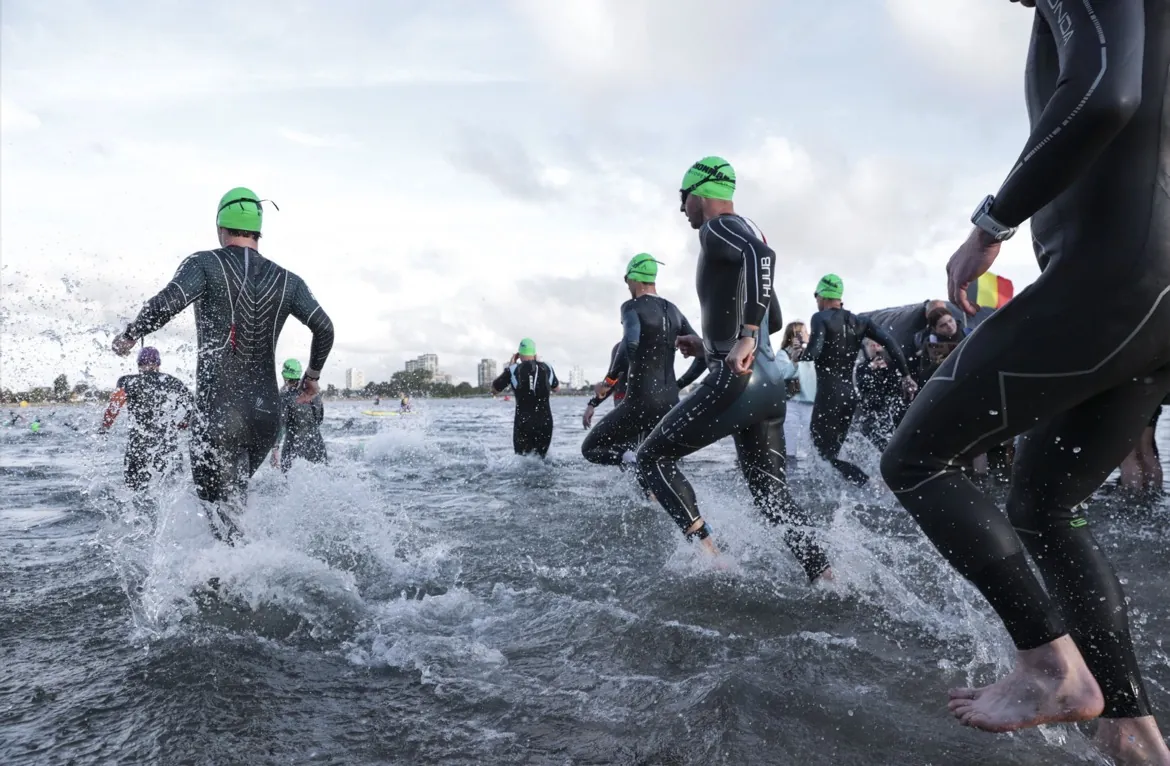
Ironman swims are notoriously physical, with hundreds of swimmers and constant contact from arms and legs. On the day, the wind added chop that made sighting difficult. The swim took 1 hour 17 minutes, slower than he had hoped, but he came out of the water feeling good.
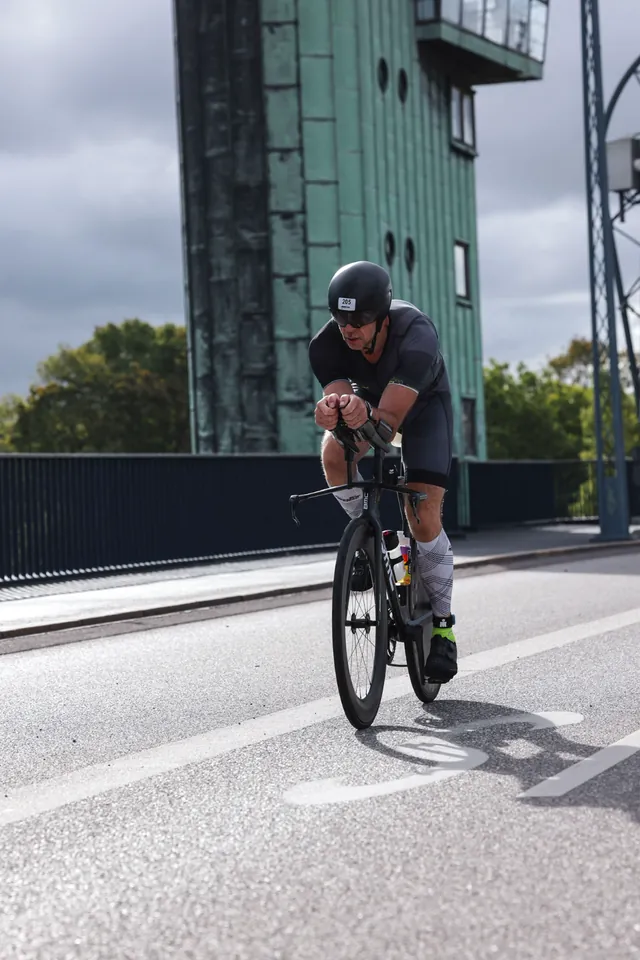
The course leaves through the streets of Copenhagen before heading inland and north, into strong, gusty wind.
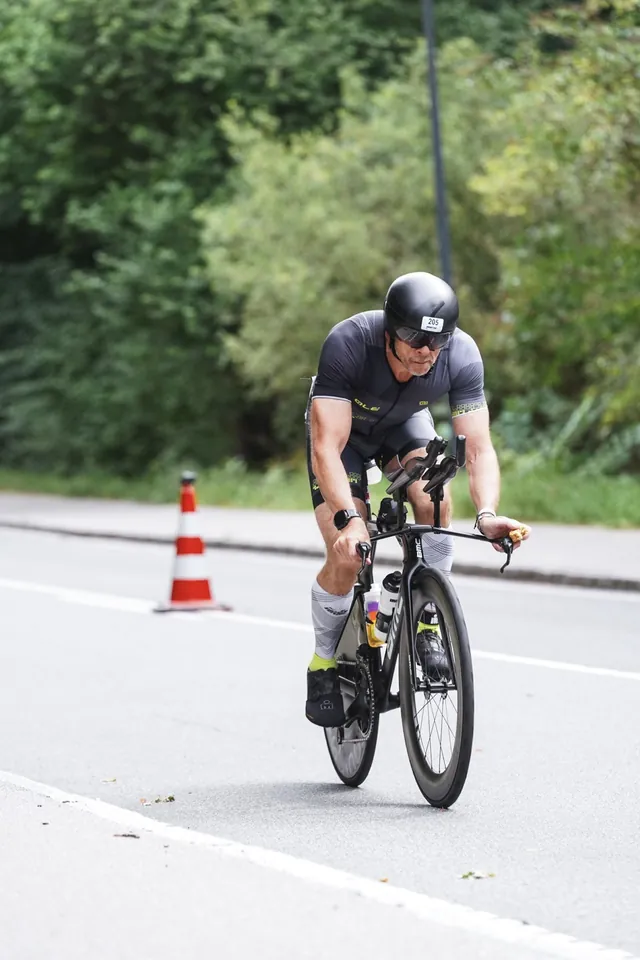
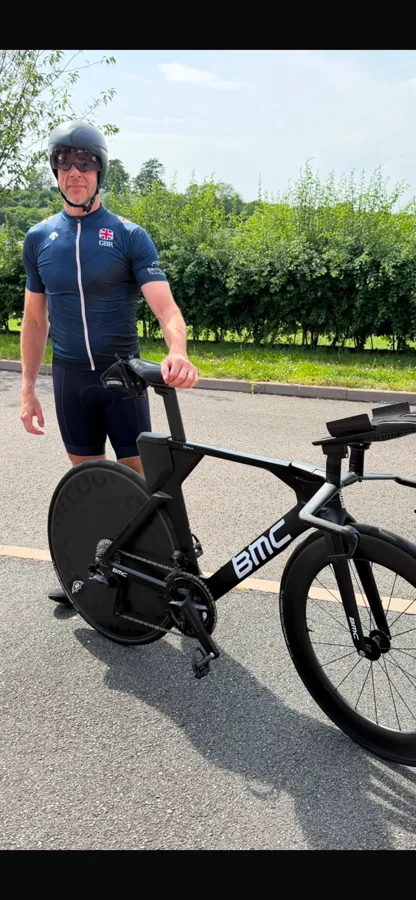
"Riding a TT bike in those conditions can feel a little like riding a sail on wheels!"
Martin, writing after the raceOnly months after his own crash, there were moments he seriously considered stopping. He stayed focused and finished the 180 km in 5 hours 23 minutes.
This was the part he had been dreading.
"I was almost waiting for the pain to return. I expected the familiar pressure to build after 20 minutes, but kilometre after kilometre, it simply didn't happen. So I kept running."
Martin, writing after the raceThe crowds along the course carried him through the hardest stretches, and he completed the marathon in 4 hours 35 minutes.
"The fact that my hip resurfacing was not the limiter, even after everything that had happened, is something I am incredibly grateful for."
Martin, writing after the race"I have definitely got my life back and feel as strong as ever, thanks to the knowledge and support of Mr Hussain, his team and everyone at ROH Birmingham."
Martin, writing to Mr HussainOne patient story is not a clinical series, and no two recoveries are identical: return to impact sport is cleared individually, on imaging and progress, not on a calendar. But Martin's story shows what the operation is for. Hip resurfacing exists for people who are not ready to give it all up yet, and an Ironman finish line eighteen months after surgery is a fair measure of that idea.
Martin's road back started with a consultation and an honest assessment of his options. Yours can start the same way: an imaging review that establishes whether resurfacing is open to you, with no pressure either way.
Book a Consultation