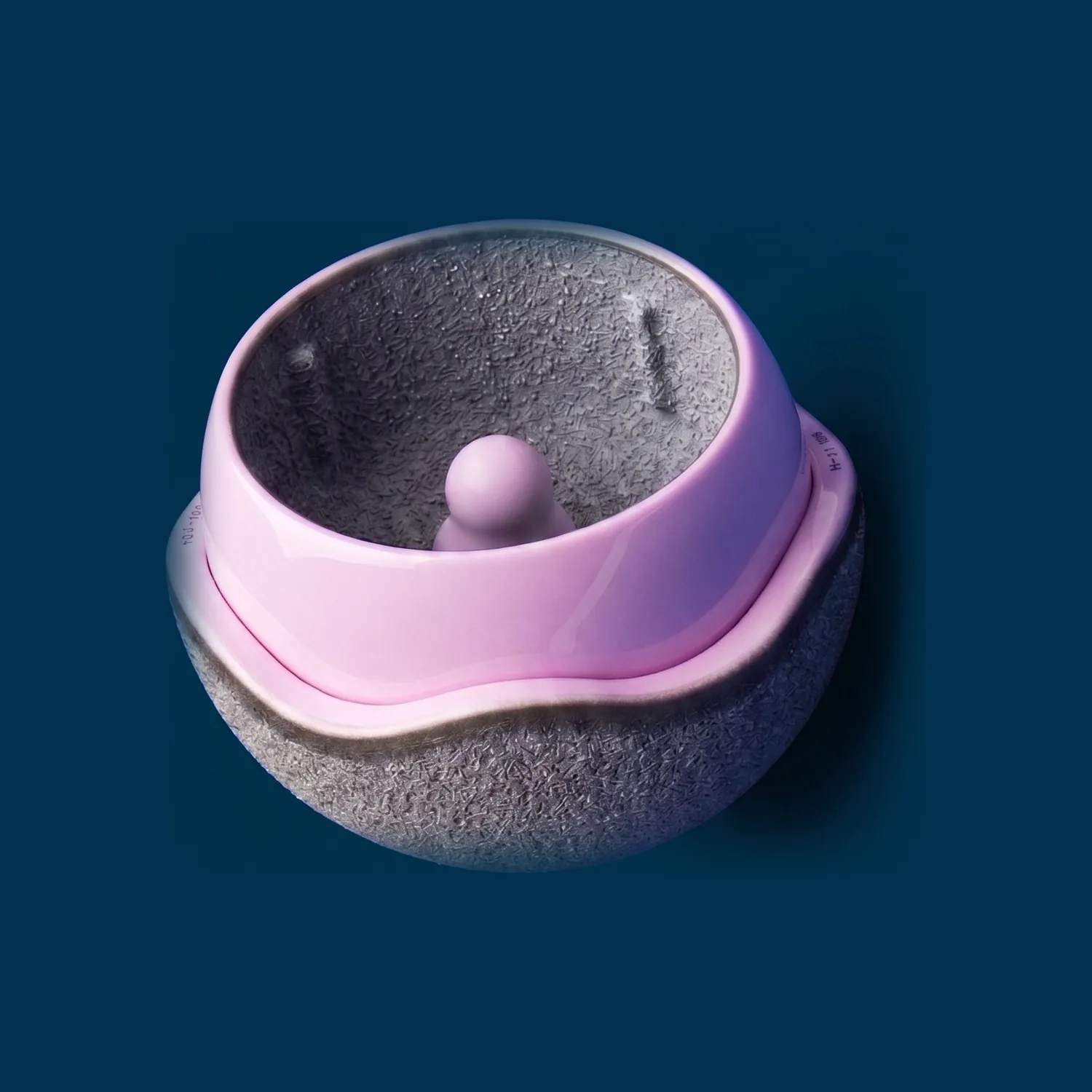
Short answerThe ReCerf and the H1 are both modern ceramic hip resurfacings, and both have encouraging early results. They have never been compared head to head in a trial, so nobody can honestly say one is proven to be better. Mr Hussain uses the ReCerf because it is built on the Adept shape he has used for many years, it has the larger peer-reviewed body of evidence, it comes in a wider range of sizes, and its cap is fixed with cement.
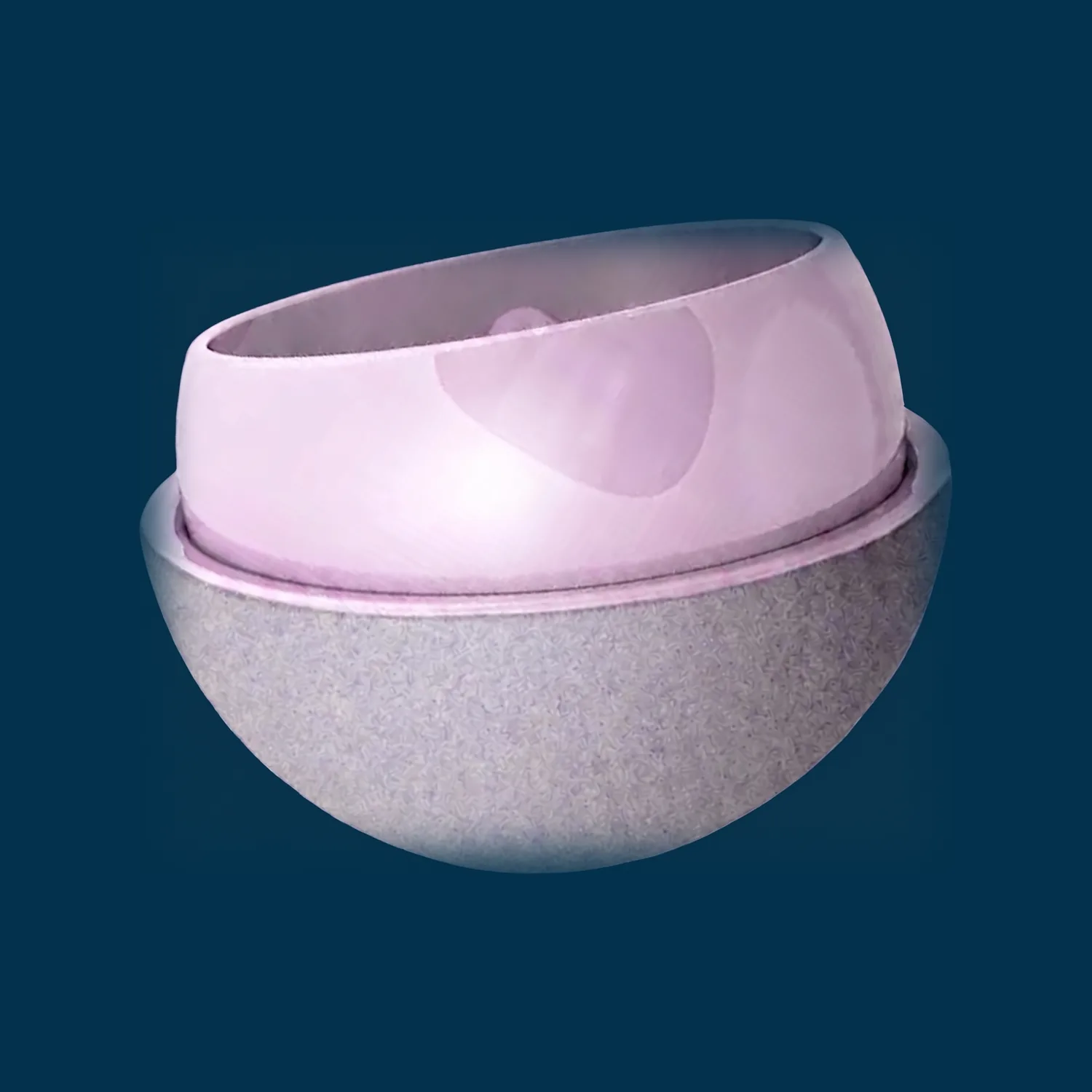
Quite a lot. Both are ceramic hip resurfacing systems: a ceramic cap fitted over your reshaped femoral head, moving against a ceramic cup in the socket. Both are made from the same ceramic, BIOLOX delta, a toughened material used across modern hip surgery. Both were developed in Britain.
Because no metal touches metal, neither releases cobalt or chromium into the body, so neither needs the lifelong blood tests that come with metal-on-metal resurfacing. And both are made small enough for most women and smaller-framed men, the patients who were turned away in the metal-on-metal years. That shared ground is the big change. The differences between the two are much smaller than the difference between either of them and the older metal implants.
The main differences are in how the parts are fixed to your bone, the range of sizes, where each design came from, and how much published evidence there is so far.
| ReCerf | H1 | |
|---|---|---|
| Made by | MatOrtho, Leatherhead, UK | Embody Orthopaedic, London, UK; distributed by Zimmer Biomet |
| Where the design came from | The Adept resurfacing, the same shape made in ceramic instead of metal | A new design from Imperial College London (Professor Justin Cobb) |
| Bearing | Ceramic on ceramic (BIOLOX delta) | Ceramic on ceramic (BIOLOX delta) |
| How the cap is fixed | Cemented | Without cement (titanium and hydroxyapatite coating) |
| How the cup is fixed | Without cement (titanium and hydroxyapatite coating) | Without cement (titanium and hydroxyapatite coating), with a contoured rim |
| Head sizes | 40 to 64 mm | 40 to 58 mm |
| First implanted | 2018 | 2017 |
| Approval | Australia 2024; CE mark 2025 | CE mark 2025 |
| Main published results | 604 hips in five countries, peer-reviewed (2025) | 250 hips from the developers’ multicentre study, reported at a 2025 conference |
Every implant has to be held firmly to your bone. There are two ways to do it. A cemented part is fixed with bone cement, which sets hard within minutes, so the part is held securely from the day of surgery. A cementless part has a rough, coated surface that your bone grows into over the following weeks, so the hold builds up as you heal.
Both methods work, and both implants use the cementless method for the cup in the socket. The difference is the cap on the femoral head. The ReCerf cap is cemented, as the Adept cap is. The H1 cap is cementless, a deliberate choice by its designers to preserve bone and avoid cement altogether.
The H1 cup has a shaped, wave-like rim rather than a flat edge. Its designers intend this to reduce groin pain caused by the tendon at the front of the hip rubbing on the cup edge. The ReCerf cup keeps the Adept’s established profile, with the same coverage across every size.
Both have promising results. They are not yet the same kind of evidence, though, and the numbers cannot be compared directly.
The largest study followed 604 hips in five countries and was published in the Bone & Joint Journal in 2025, after review by independent experts. At five years, 98.0% of implants were still in place. Results were the same for men and women, and for smaller and larger hips. Ten hips needed a revision. Two-year results from the same group were published in 2024. More than 1,600 people have now received a ReCerf.
The H1’s developers have followed 250 hips operated on between 2017 and 2022. Results presented at a US conference in October 2025 showed 96.3% survival at up to eight years. Eight hips needed a further operation, and men and women did equally well.
It is tempting to set 98.0% against 96.3%, but that would not be fair to either implant. The studies followed patients for different lengths of time, and they used different patient groups and different surgeons. What can be said is that the ReCerf has the larger peer-reviewed dataset across a wider range of sizes, and the H1 has a smaller group followed for longer. Neither yet has the ten- to fifteen-year results that would settle the question.
There is no trial that answers this, and anyone who tells you one is proven superior is going beyond the evidence. Both are well-designed ceramic implants, and either can give an excellent result in the right hands. What matters most is that the implant suits your hip, and that it is put in by a surgeon who uses it regularly.
None of this makes the H1 a poor implant. It is a thoughtful design with encouraging results, and other surgeons have good reasons for choosing it. These are the reasons Mr Hussain has settled on the ReCerf as the ceramic resurfacing he offers.
Whether ceramic resurfacing suits you at all is a separate question, decided on your bone quality, anatomy and activity. That is covered on the am I a candidate page.
A self-pay ceramic hip resurfacing with Mr Hussain is a fixed, all-inclusive package for one hip. It covers the surgeon’s and anaesthetist’s fees, the implant, theatre time, your hospital stay, in-patient physiotherapy and routine follow-up. Insured patients are covered by their policy, subject to pre-authorisation. Current prices for each hospital are on the fees and insurance page.
Both are ceramic-on-ceramic hip resurfacings made from the same ceramic. The ReCerf, made by MatOrtho, is the Adept shape in ceramic, with a cemented cap and head sizes from 40 to 64 mm. The H1, made by Embody Orthopaedic, is a newer design from Imperial College London, with a cementless cap, a contoured cup rim and head sizes from 40 to 58 mm.
No trial has compared them directly, so neither is proven better. Both have encouraging results. The ReCerf has the larger peer-reviewed study, 604 hips with 98.0% survival at five years. Mr Hussain uses the ReCerf for its Adept heritage, its evidence, its wider size range and its cemented cap.
Both methods are used successfully in hip surgery. Cement holds the part firmly from the day of surgery; a cementless part avoids cement and is held by bone growing into its coated surface over the following weeks. Mr Hussain prefers a cemented cap, the method used for the Adept, which is why the ReCerf suits his practice.
No. In both implants the surfaces that move against each other are ceramic, so no cobalt or chromium is released. Neither needs the lifelong blood tests that metal-on-metal resurfacing requires.
Patients with both implants continue to be followed in ongoing studies. The ReCerf has published five-year results and the H1 has reported results at up to eight years. Ten- and fifteen-year results will follow as time passes; until then, every patient is told exactly where the evidence stands.
A consultation with weight-bearing X-rays is the best way to find out whether ceramic resurfacing suits your hip. Mr Hussain will explain what he recommends and why, and answer any questions you have about the ReCerf or the H1.
Book a Consultation